Ask any experienced paver in Central Florida what makes asphalt last, and they will not start by talking about the asphalt. They will talk about what is underneath it. The base — the compacted layer of aggregate and prepared soil beneath your pavement — carries the actual load. The asphalt is really just a smooth, waterproof wearing surface. And in Central Florida, the soil that base is built on is unusually variable, which is exactly why base prep is where good contractors earn their keep.
Florida's mixed bag of soils
Central Florida does not have one soil type; it has several, sometimes within the same property. You will find deep, loose sands that drain fast but do not hold together, pockets of clay that swell when wet and shrink when dry, organic muck near wetlands and old lake beds, and limestone close to the surface in some areas. Each behaves differently under a pavement load, and treating them all the same is a recipe for premature failure.
- Sandy soils drain well but need confinement and compaction to bear load
- Clay soils expand and contract with moisture, heaving pavement above them
- Organic muck compresses over time, causing pavement to sink
- Near-surface limestone can be a strong base or a drainage wildcard
Why the base is 90 percent of the job
Think of pavement like a mattress. A great mattress on a broken frame still sags. Perfect asphalt on a weak base still fails. When the base is properly excavated, graded, filled with the right aggregate, and compacted to spec, it spreads vehicle loads evenly and keeps water moving away from the soil. When it is rushed, the pavement above it becomes a thin shell over instability, and no amount of surface-level care will save it.
You are not buying asphalt. You are buying the base — the asphalt is just the part you can see.
What proper base prep looks like
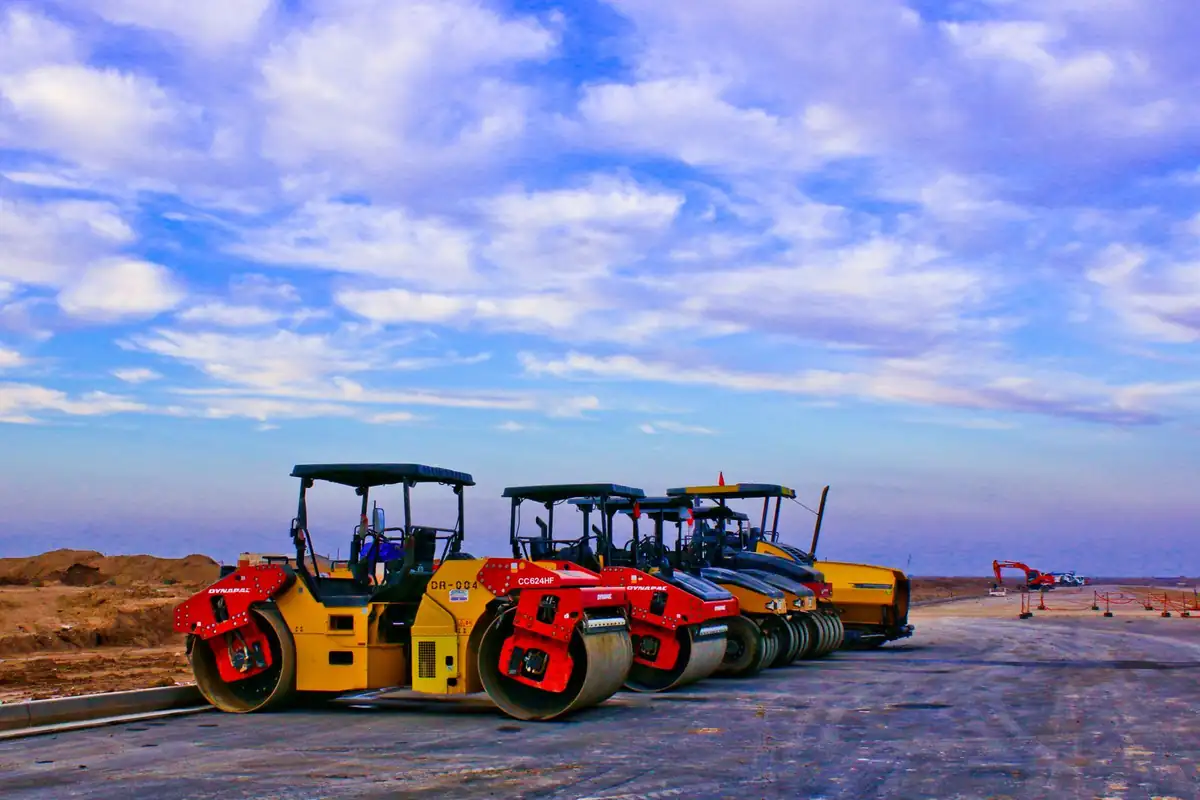
On every asphalt paving project, the base work is where we spend our attention. It usually involves excavating to the right depth, removing unsuitable soil like muck or debris, installing and grading a clean crushed-aggregate base, and compacting it in lifts with heavy rollers until it hits target density. On weak or wet subgrades we may stabilize the soil or add geotextile fabric to keep the base and subsoil from mixing. Only when that foundation is solid does the asphalt go down.
- Excavate to design depth and remove muck, roots, and debris
- Place and grade a crushed-aggregate base for load spreading and drainage
- Compact in lifts to target density — density is strength
- Stabilize soft subgrade with fabric or treatment where needed
The signs of a bad base show up later
Base failures rarely appear right away. They show up a year or two down the road as alligator cracking (interconnected cracks that look like reptile skin), edge cracking, potholes, and sunken areas. These are not surface problems you can seal away — they are the base telling you it was never strong enough. That is why the cheapest bid is so often the most expensive choice in the long run. Catching early cracking with prompt crack filling and pavement maintenance helps, but it cannot substitute for a base that was built right the first time.
Local knowledge is not optional here
Base thickness is matched to the load
A residential driveway and a truck-heavy commercial lot are not the same problem, and their bases should not be identical. Light passenger traffic can ride on a modest base, but delivery trucks, garbage trucks, and loaded trailers concentrate enormous weight on small contact patches. That is why commercial parking lots get thicker asphalt and a deeper, stronger aggregate base in their drive lanes and dumpster areas. Building every surface the same way either wastes money on a driveway or, far worse, under-builds a lot that will rut and crack under its real traffic. Matching the base to the actual load is a core part of designing pavement that lasts.
Because Central Florida soils vary so much, base prep is genuinely site-specific. A crew that paves a lot in sandy east Orlando the same way it paves one over clay or old muck is going to get burned. Local experience — knowing what is under the ground in your area and how it behaves in our climate — is what turns a base into a foundation that lasts. To go deeper on sandy soil specifically, see our post on sandy soil and asphalt base prep challenges.
Need a Free Estimate?
Iron Ridge Pavement gives upfront, no-obligation pricing on paving, sealcoating, striping and repairs across Florida.