Florida gets more than 50 inches of rain a year, most of it in dramatic summer downpours. All that water is quietly the number-one destroyer of asphalt in the state — a bigger long-term threat than any single storm. If you want pavement that lasts here, you have to understand what water does and how to keep it out.
Water attacks from two directions
Rain damages asphalt both on top of the surface and, more dangerously, underneath it.
On the surface
Water finds every crack and pore in unsealed asphalt and seeps in. When it sits, it slowly dissolves the binder that holds the surface together, accelerating the raveling and roughness that the sun already started. A surface that beads water sheds this damage; a thirsty, unsealed one soaks it up.
Under the surface — the real killer
The bigger danger is water that gets through cracks and into the base — the compacted layer that supports the pavement. Once water saturates the base, it washes material away and creates voids. With nothing supporting it, the asphalt above flexes, cracks, sinks, and eventually collapses into potholes. Almost every pothole in Florida traces back to water in the base.
Surface water fades and roughens your asphalt. Water in the base destroys it. Drainage isn't a detail — it's the whole game.
The freeze-thaw exception — and why Florida is different
In cold states, the classic pothole story is freeze-thaw: water gets in cracks, freezes, expands, and pries the pavement apart. Florida mostly skips that cycle, which leads some owners to assume water is less of a threat here. It's the opposite. What we lose in freeze-thaw we more than make up for in sheer volume and frequency. Where a northern lot might get soaked a couple dozen times a year, a Central Florida lot gets flooded almost daily through the summer rainy season. That relentless saturation of the base is its own destructive force, and it works year-round because our pavement never really gets a dry break in summer.
Why standing water is the worst offender
A quick rain that drains off does limited harm. Water that ponds — the puddles still sitting on your lot hours after a storm — is what wrecks pavement, because it has time to soak in and work its way down to the base. Persistent birdbaths on a driveway or lot are a warning that either the drainage or the pavement itself needs attention.
How to protect pavement from water
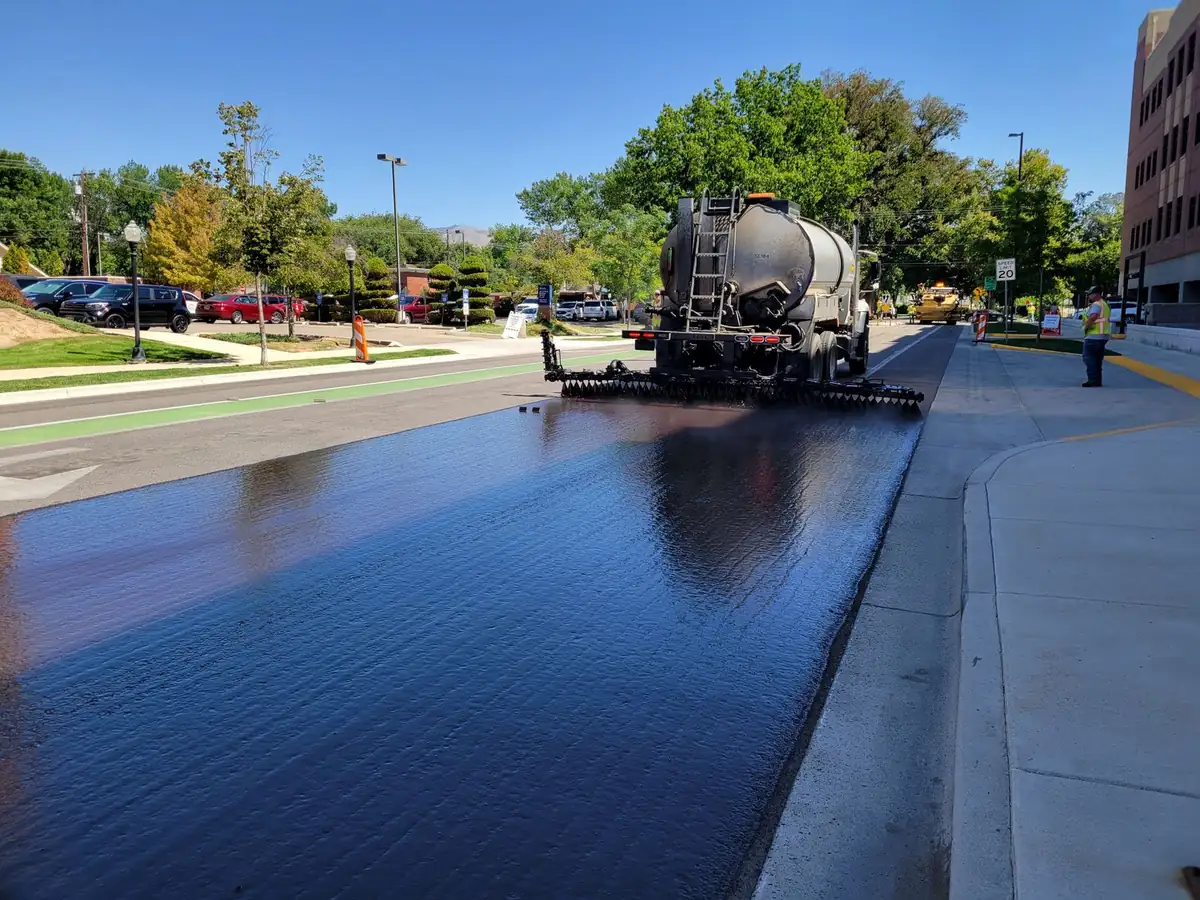
- Sealcoat regularly. A sealcoat waterproofs the surface so rain sheds instead of soaking in.
- Fill every crack. Cracks are water's path into the base — crack filling shuts that door.
- Fix the drainage. If water ponds, the slope or the surface needs correcting, often with patching or resurfacing to restore proper flow.
- Patch failures fast. Address low spots and potholes with asphalt repairs before the next storm makes them worse.
Spotting a drainage problem early
You don't need special equipment to find the water problems on your property — you just need to look at the right time. The best moment is right after a hard Florida rain. Walk the surface and note anywhere water is still pooling 30 to 60 minutes after the storm has passed. Those spots are your trouble areas: either the pavement has settled into a low bowl or the drainage slope has been lost. Mark them, and check whether cracks are concentrated around those same low points — they usually are, because that's where water sits longest and does the most damage. Catching a ponding area while it's still just a puddle, before it has hollowed out the base and become a pothole, is one of the highest-value things you can do for your pavement.
The Florida takeaway
In a climate this wet, keeping water out of your pavement is the entire battle. Seal the surface, fill the cracks, and make sure water drains instead of ponds, and you've defeated the thing that destroys most Florida asphalt. A regular maintenance plan keeps all three handled. To understand how the sun sets this damage up, read our guide on why the Florida sun destroys asphalt.
Need a Free Estimate?
Iron Ridge Pavement gives upfront, no-obligation pricing on paving, sealcoating, striping and repairs across Florida.