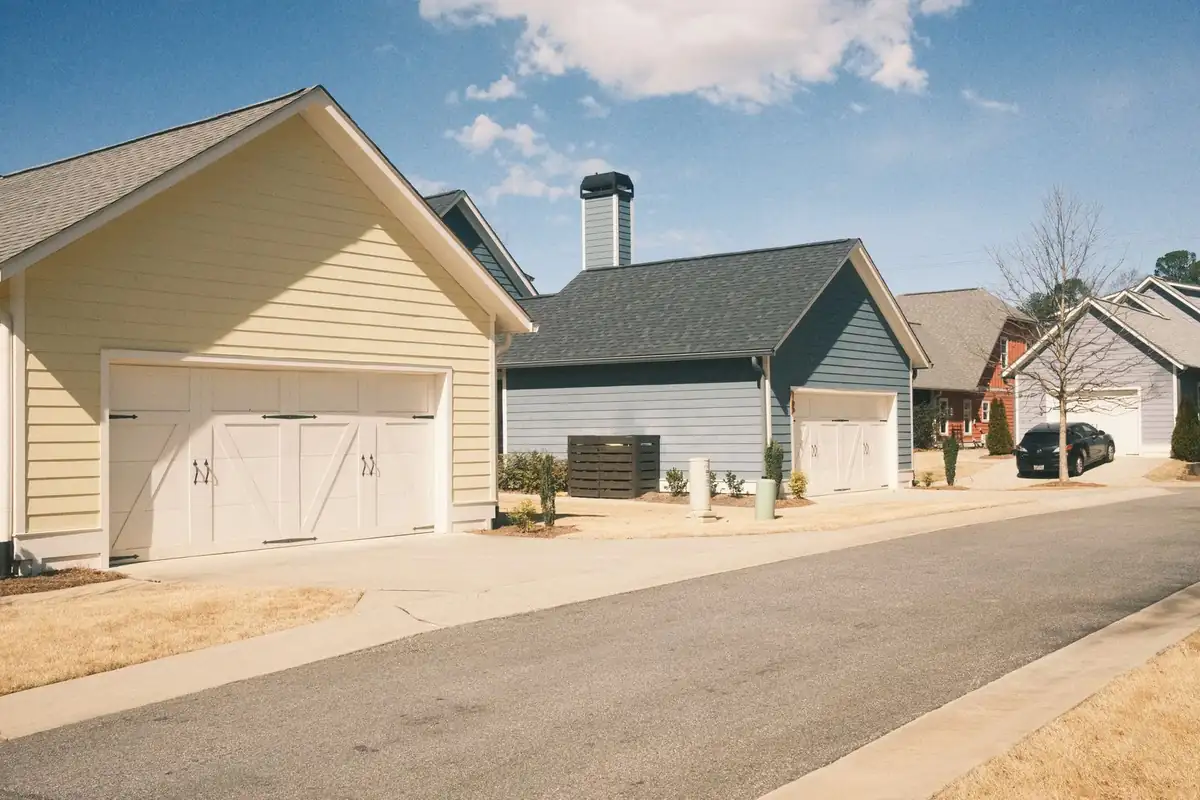
The apron is the section of driveway that connects your property to the road. It is usually the first part to crack, the first to crumble at the edges and the part most likely to have a lip that catches a bumper. Every vehicle that enters or leaves crosses it under braking or acceleration, often turning at the same time, and it is exposed to the road's drainage as well as your own.
Why aprons take the most punishment
- Turning loads. Vehicles swing into the driveway from the road, which puts shear stress on the surface at exactly the spot where the pavement is thinnest.
- Road water. Whatever runs along the gutter or the road edge crosses the apron. If the grade is wrong, it pools there.
- Heavy vehicles. Delivery trucks, garbage trucks and service vehicles that never touch the rest of the driveway all cross the apron.
- Mismatched materials. The apron often has to tie into a concrete curb, gutter or sidewalk with different thickness and behaviour.
What a properly built apron looks like
A good apron is built to a heavier specification than the rest of the driveway. That means a deeper base and often a thicker asphalt section through the transition zone, because it is carrying more load and taking more shear. The edges are confined, either by the existing curb and gutter or by a proper taper into supported ground, so the corners do not break away when a tire clips them.
The grade is set so that water from the road does not flow up the driveway and water from the driveway does not pool at the road edge. Where the driveway meets a concrete gutter, the asphalt is feathered to meet it flush rather than leaving a lip. Where there is a swale or a culvert, as on many older lots in Apopka, Oviedo and Sanford, the apron has to carry over it without crushing the pipe or blocking the flow.
The apron is where the road's problems and the driveway's problems meet. Build it for both.
The right-of-way question
The part of the apron between the road edge and your property line typically sits in the public right-of-way. Many cities and counties in Central Florida have rules about work there, sometimes requiring a permit or a specific construction standard for the connection. This varies by jurisdiction, so it is worth checking with your local public works or building department before a driveway project, and it is something to raise with your contractor at the estimate stage rather than on paving day.
Common apron problems and fixes
A lip at the road edge, where the driveway sits higher or lower than the gutter, is usually a grading issue and is corrected by milling or rebuilding the transition. Crumbling corners are an edge support issue and are fixed by cutting back to sound material and rebuilding with confined edges. Cracking across the apron in a fan pattern is turning stress on a thin section, and the durable fix is to rebuild that zone to a heavier spec. Our post on crumbling asphalt edges covers the edge side in more detail.
If the rest of the driveway is sound, the apron can be rebuilt on its own. If the driveway is due for resurfacing, the apron is the section most likely to need full-depth work before the overlay goes on. Our post on repair versus replacement helps with that call.
Need a Free Estimate?
Iron Ridge Pavement gives upfront, no-obligation pricing on paving, sealcoating, striping and repairs across Florida.
Iron Ridge Pavement LLC builds and rebuilds driveway aprons as part of driveway paving across Orlando, Winter Park, Lake Mary and Central Florida. Request an estimate.