If you've ever watched a black asphalt driveway fade to a chalky gray, you've watched the Florida sun eat it alive. Our year-round UV and brutal summer heat make Central Florida one of the harshest places in the country to own pavement. Understanding exactly how the sun does its damage is the first step to stopping it.
Oxidation: the slow burn
Asphalt is bound together by a black, tar-like petroleum binder. That binder is what makes fresh pavement flexible, watertight, and deep black. When UV rays hit it, they trigger oxidation — a chemical reaction that dries the binder out and makes it brittle.
As the binder oxidizes, three things happen in order:
- The surface fades from black to gray as the binder breaks down.
- The pavement loses flexibility and can no longer expand and contract without cracking.
- The binder erodes away, exposing loose stones (raveling) and leaving a rough, weak surface.
Gray asphalt isn't just ugly. It's the visible sign that the glue holding your pavement together is drying up and failing.
Heat makes it worse
Florida asphalt surface temperatures regularly top 140°F in summer. That heat softens the pavement during the day so it deforms under tires and parked vehicles, then it cools and stiffens at night. This daily expand-and-contract cycle, repeated over years on binder that's already oxidizing, is a recipe for cracking.
Then the rain finishes the job
Once the sun has opened up cracks and eroded the surface, our daily summer downpours pour water straight into the pavement and the base beneath it. That's how a sun-damaged surface becomes a structural problem. We cover that chain of events in detail in our guide on how rain and standing water damage pavement.
Raveling: when the surface starts shedding
One of the clearest signs the sun has won a round is raveling — loose stones scattered across the surface and a texture that feels like coarse sandpaper. That's the aggregate coming free because the binder that was holding it has oxidized and washed away. Once raveling starts, the surface loses material with every car and every rain, and it accelerates. Raveling is the stage right before cracking and structural loss, and it's a strong signal that a protective seal coat is overdue.
How to protect asphalt from the Florida sun
You can't turn down the sun, but you can armor your pavement against it. The playbook is simple and it works:
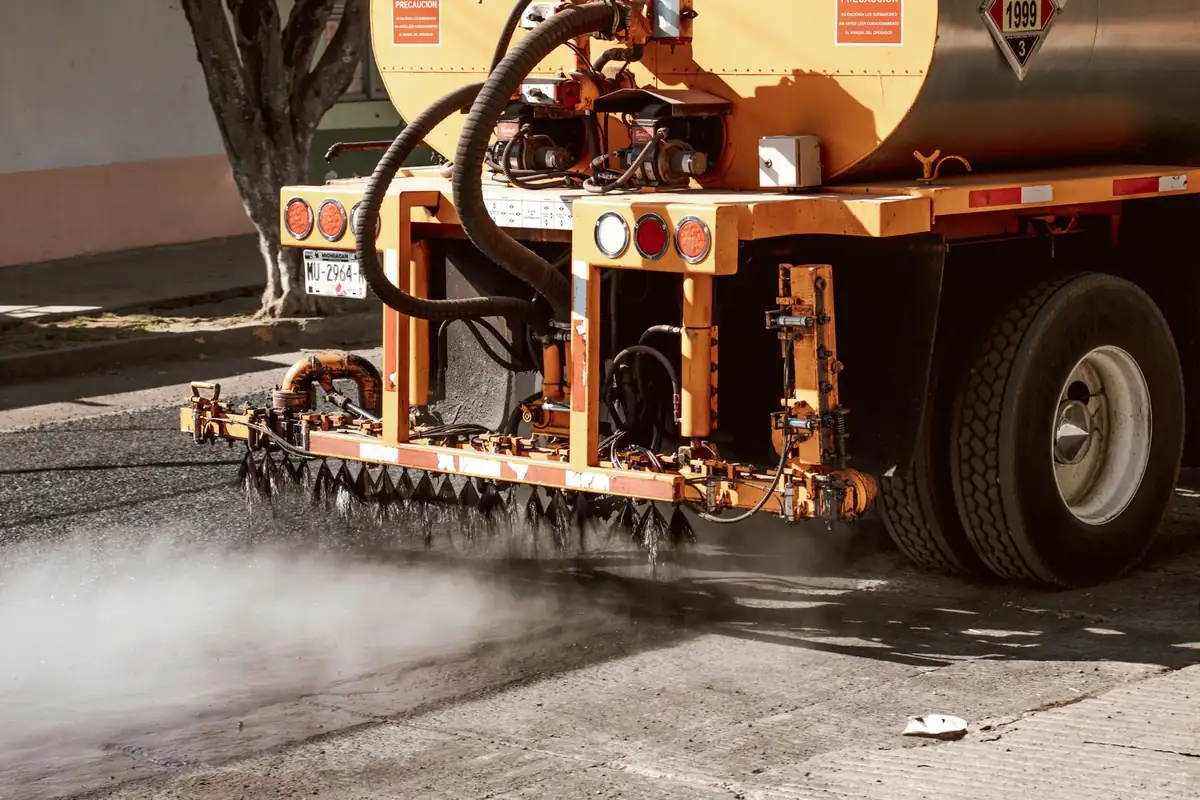
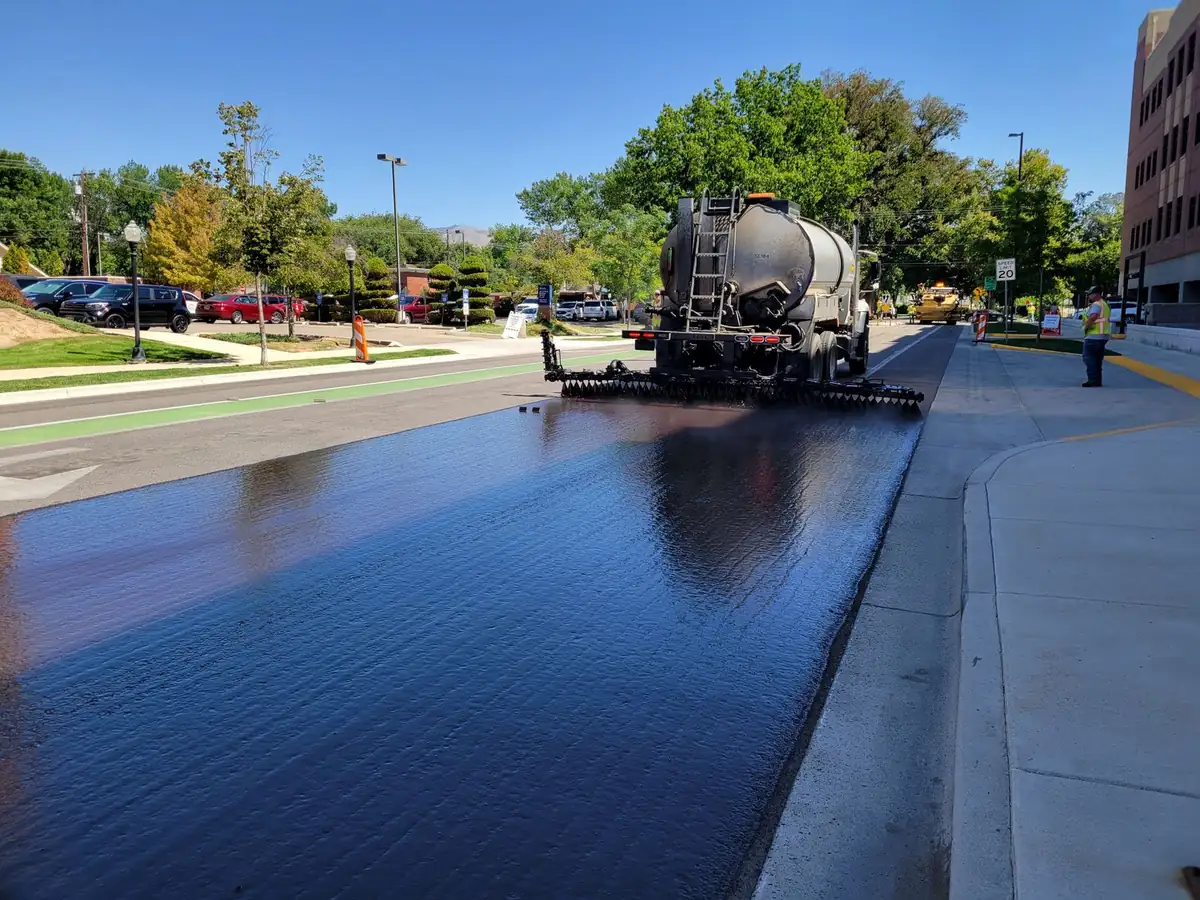
- Sealcoat every 2 to 3 years. A fresh coat of sealer is a UV shield that blocks oxidation and restores the black finish.
- Fill cracks early with crack filling before water gets in and the sun widens them further.
- Stay on a maintenance schedule so small problems get caught before the sun turns them into big ones — our pavement maintenance plans handle exactly that.
New pavement can be built to fight back too
Protection starts before the sun ever touches the surface. When we install new asphalt paving in Florida, the mix design, compaction, and base prep all matter for how well that surface will stand up to years of UV and rain. A properly built pavement with a solid, well-drained base has the structural reserve to age gracefully; a thin, poorly compacted job starts oxidizing on a surface that had no margin to begin with. Then the maintenance schedule preserves that head start. Doing both — building it right and protecting it on time — is how Florida asphalt reaches the top of its lifespan instead of the bottom.
The bottom line
In Florida, doing nothing is a decision — and it's an expensive one. Bare asphalt left to the sun can lose 10 or 15 years of lifespan. Sealed and maintained pavement shrugs the UV off and lasts decades. The sun is relentless here. Your maintenance should be too — the pavement that lasts is the pavement someone kept an eye on.
Need a Free Estimate?
Iron Ridge Pavement gives upfront, no-obligation pricing on paving, sealcoating, striping and repairs across Florida.