Cracks are your driveway's way of telling you something. Read them right and you fix a $150 problem before it becomes a $6,000 one. Read them wrong — or ignore them — and Florida's sun and rain will do the rest. Here is what each type of crack actually means and how Iron Ridge Pavement fixes it.
The root causes
1. UV and oxidation
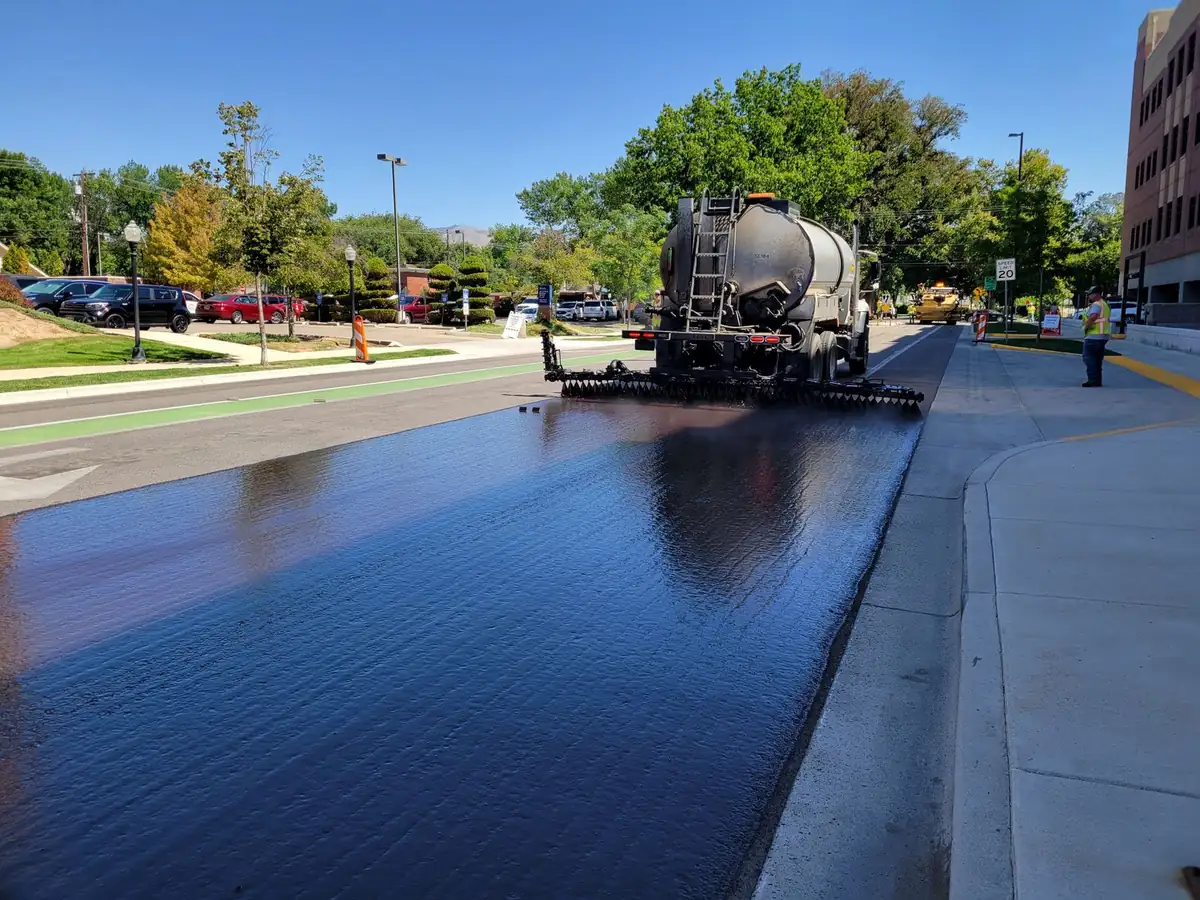
Central Florida sun is brutal on asphalt. UV oxidizes the binder that holds the surface together, and as those oils bake out the asphalt turns gray, brittle, and prone to cracking. This is the slow, invisible killer, and it is exactly what sealcoating prevents by replacing surface oils and blocking UV.
2. Water infiltration
Every crack lets water into the base. Florida's heavy afternoon storms flood poorly drained driveways, and once water saturates the sandy base underneath, it loses strength and the asphalt above sinks and fractures. Water is the number-one accelerator of nearly every crack type.
3. A weak or thin base
Most serious cracking traces back to how the driveway was built. Too thin an asphalt layer, an under-compacted base, or the wrong sub-base for Florida's expansive soils, and the surface cannot carry the load. This is where grading and base work earns its keep.
4. Tree roots and heavy loads
Roots from nearby oaks and palms lift and split asphalt from below. Repeated heavy loads — an RV, a loaded work truck, a dumpster — press cracks into a surface that was not built for them.
Match the crack to the fix
Hairline and linear cracks
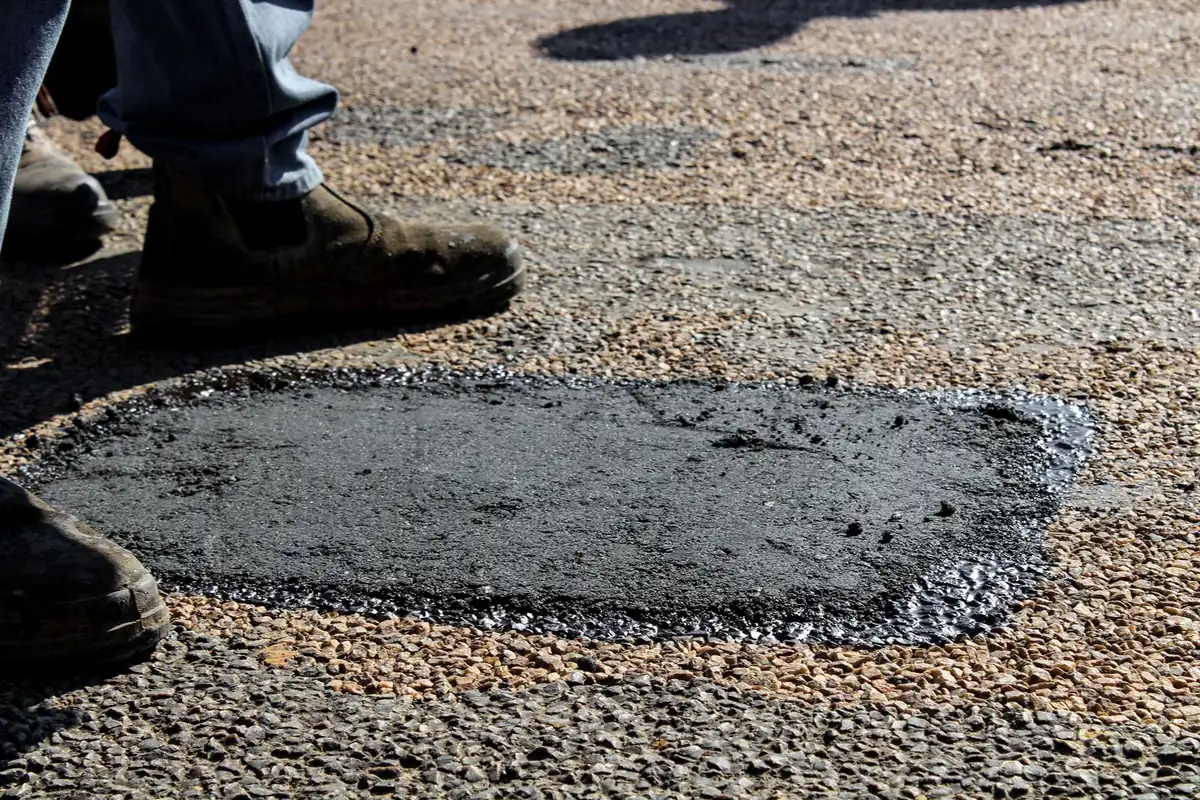
Thin, single cracks running along or across the driveway are the easy ones. Clean them out and fill with a hot rubberized crack sealant before water gets in. Do this early and often — it is the cheapest insurance in paving.
Block cracking
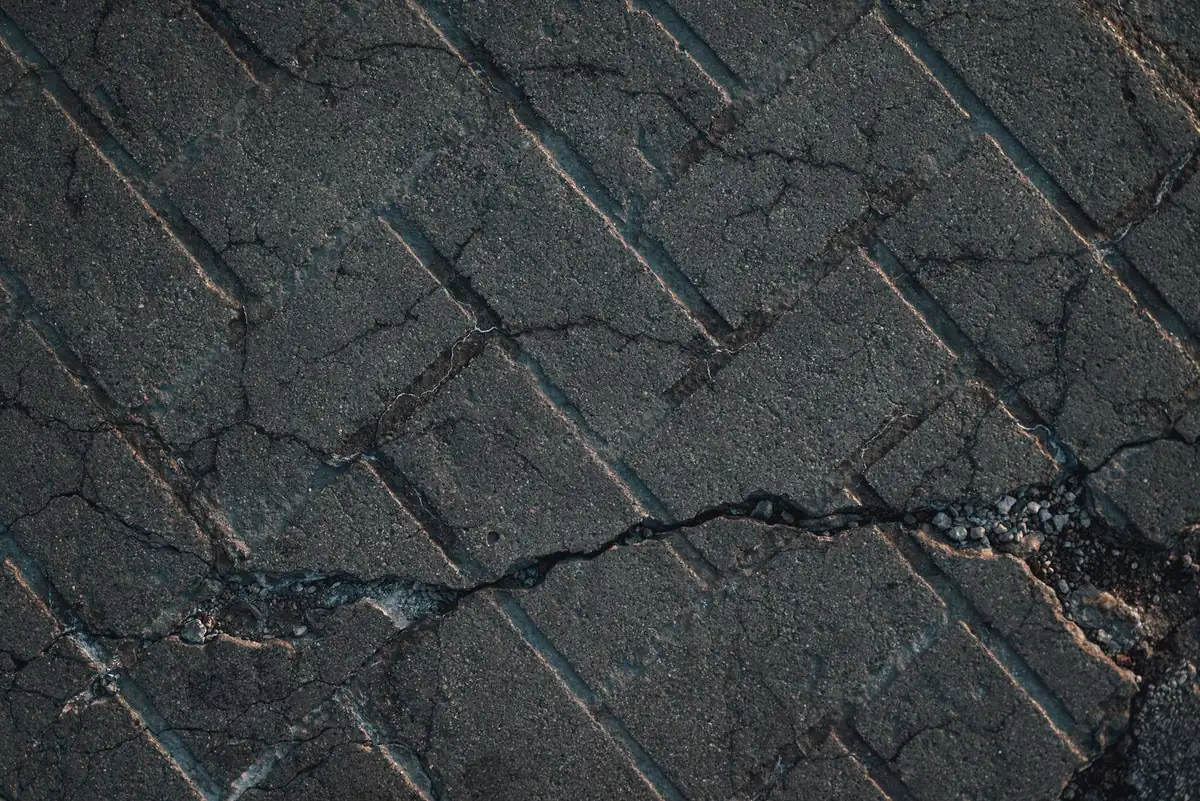
Large interconnected rectangles usually mean the asphalt has aged and dried out (oxidation). Crack-fill the openings, then sealcoat the whole surface to slow further drying. If it's widespread, an overlay may be the better value.
Alligator cracking
Interconnected cracks resembling reptile skin mean the base has failed. Filling won't hold — this needs a full-depth repair or, if widespread, replacement. Do not waste money sealing over it.
Edge cracks
Cracks running parallel to the unsupported edge come from tires riding over it and poor edge support. Back-fill the edges with soil for lateral support and seal the cracks.
A pencil-width crack is a five-minute fix. Ignored through two rainy seasons, it becomes a pothole and a base repair.
The Florida timing that matters
Our seal window is small: fill cracks and sealcoat before the summer rains, not during them. A crack left open in June funnels storm water straight into the base for months. Inspect your driveway twice a year — after the summer storm season and after any winter cold snap — and address new cracks immediately.
The cheapest strategy
Prevention beats repair every time. A driveway on a simple maintenance schedule — seal every 2–3 years, fill cracks as they appear, keep water moving off the surface — rarely sees the expensive failures. The homeowners who replace driveways early are almost always the ones who let the first cracks sit.
A quick self-diagnosis walk
Take five minutes after the next hard rain and walk your driveway with these questions in mind: Does water sheet off, or does it pool anywhere? Are the cracks single lines, connected rectangles, or a reptile-skin web? Do any sections feel soft or springy under your feet? Are the edges crumbling? Your answers point straight to the cause — pooling means a drainage or slope problem, a web means the base, soft spots mean saturation, crumbling edges mean support. Snap a few photos and you've got everything a paving pro needs to give you an accurate read.
Need a Free Estimate?
Iron Ridge Pavement gives upfront, no-obligation pricing on paving, sealcoating, striping and repairs across Florida.
Seeing cracks and not sure how serious they are? Iron Ridge Pavement will diagnose them honestly across Orlando and Central Florida and quote only what's needed. Get a free estimate.