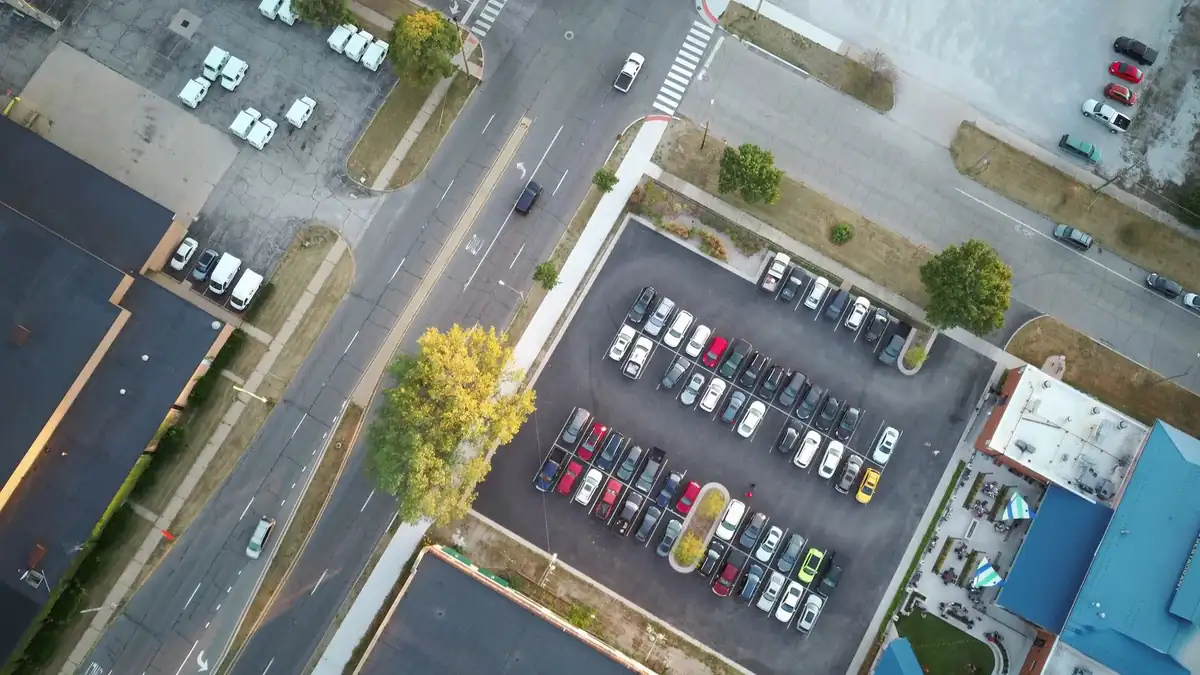
A church parking lot in Orlando sits nearly empty six days a week and then fills completely for a few hours on the seventh. A school lot in Oviedo or Winter Springs handles a fleet of buses, a rush of parent drop-offs twice a day and staff parking all day, then empties for the summer. Both have calendars that cannot move, and both need pavement work planned around them rather than in spite of them.
Why these lots wear the way they do
Church lots see very concentrated use: hundreds of vehicles arriving and leaving in a short window, often with events and overflow parking on grass and edges. The drive aisles and entrances take the wear, while the outer stalls barely see a tire. School lots take bus traffic, which is heavy and repetitive, plus a drop-off loop where vehicles idle, creep and turn in the same path many times a day. That loop and the bus lane are where school pavement fails first.
Scheduling around a church
- Most paving and sealcoating work fits into the weekday window with no disruption to services.
- Sealcoating needs a cure period before vehicles return, so it is scheduled early in the week to give the surface time before the weekend.
- Larger lots are often done in phases so that part of the lot stays open for weekday activities, offices and mid-week events.
- Funerals, weddings and special services need to be on the contractor's calendar before the work is booked.
A church lot gives you six days of quiet a week. The job is to use them and be gone by the seventh.
Scheduling around a school
Summer break is the obvious window for school pavement work, and it is when most of it gets done. That has consequences. It is also the hottest, wettest part of the Central Florida year, so sealcoating and paving have to work around afternoon storms and humidity. It is also when every school in the district wants the same contractors, so booking early matters. Our post on paving in Florida's rainy season covers how the weather is handled.
Smaller jobs such as crack filling, patching and re-striping can often be done during term on weekends or teacher planning days, with the bus lane and drop-off loop sequenced so they are open by the next school morning.
Striping for buses and drop-off
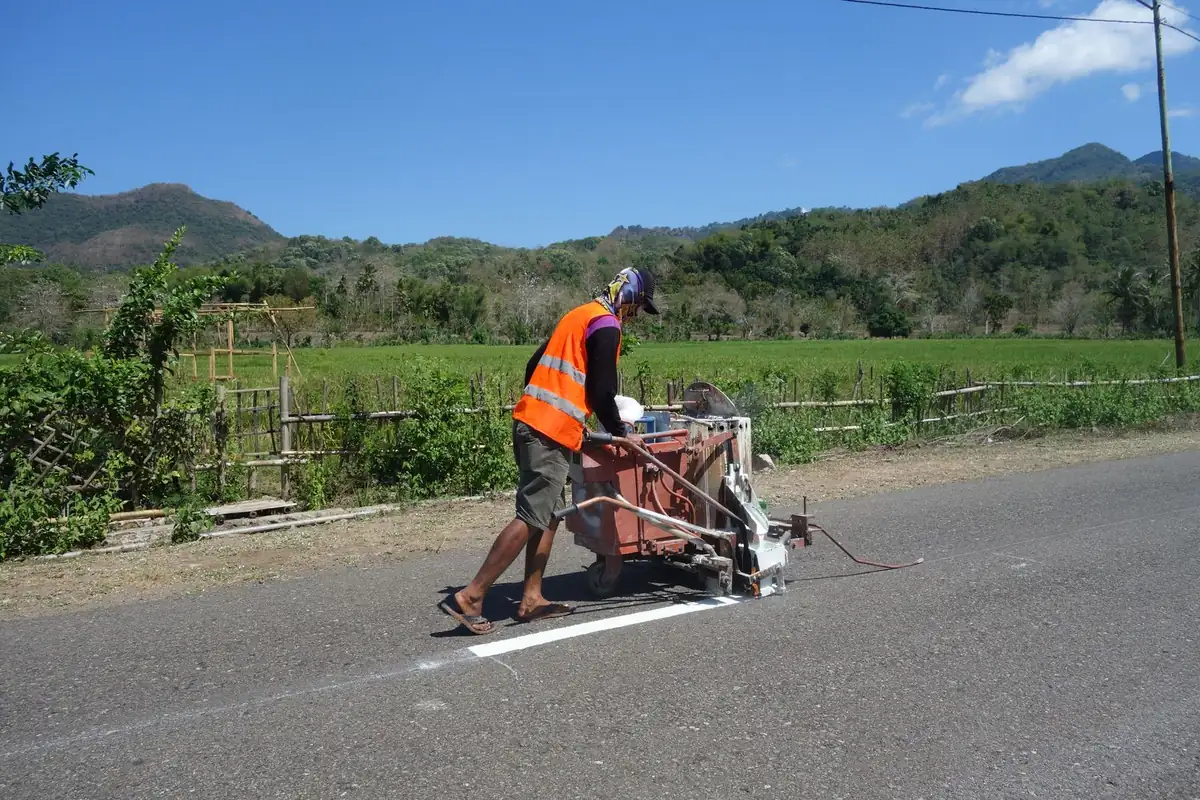
School lot striping is not just stalls. It includes bus lanes, no-parking zones, crosswalks, pedestrian routes from parking to the building, fire lanes and accessible spaces sized for vans and lifts. Church lots need clear accessible parking near entrances, fire lanes kept clear even during overflow, and often a drop-off zone at the door. Our posts on fire lane striping requirements and ADA striping requirements in Florida cover the compliance side.
Budgeting on a fixed cycle
Both churches and schools typically plan capital spending annually, which suits pavement well. A condition assessment before the budget is set, a maintenance plan that spreads sealcoating and crack filling across years, and a known date for the eventual overlay keep the pavement out of the emergency column. Our pavement maintenance programs are built for exactly that cycle.
Communication is the last piece. A notice to the congregation or the parent community a week ahead, cones and signage on the day, and a clear plan for where vehicles go while a section is closed keep the work from becoming an event. We supply the plan; the church office or school administration gets it in front of the people who need it.
Need a Free Estimate?
Iron Ridge Pavement gives upfront, no-obligation pricing on paving, sealcoating, striping and repairs across Florida.
Iron Ridge Pavement LLC paves, sealcoats and stripes church, school and institutional lots across Orlando, Oviedo, Winter Springs, Kissimmee and Central Florida, scheduled around your calendar. Request an estimate.