If you have ever watched an Orlando sky go from clear to a wall of rain in under twenty minutes, you already understand the central challenge of paving in Florida's rainy season. From roughly late May through October, Central Florida sees near-daily afternoon thunderstorms, and asphalt is a material that hates being caught in the rain at the wrong moment. That does not mean paving stops for half the year — it means it has to be planned by people who watch the radar as closely as they watch the roller.
At Iron Ridge Pavement, we run a full schedule right through the wet months. The difference between a driveway that lasts twenty years and one that ravels apart in three often comes down to whether the crew respected moisture, timing, and the base underneath. Here is what actually matters.
Why water and hot asphalt do not mix
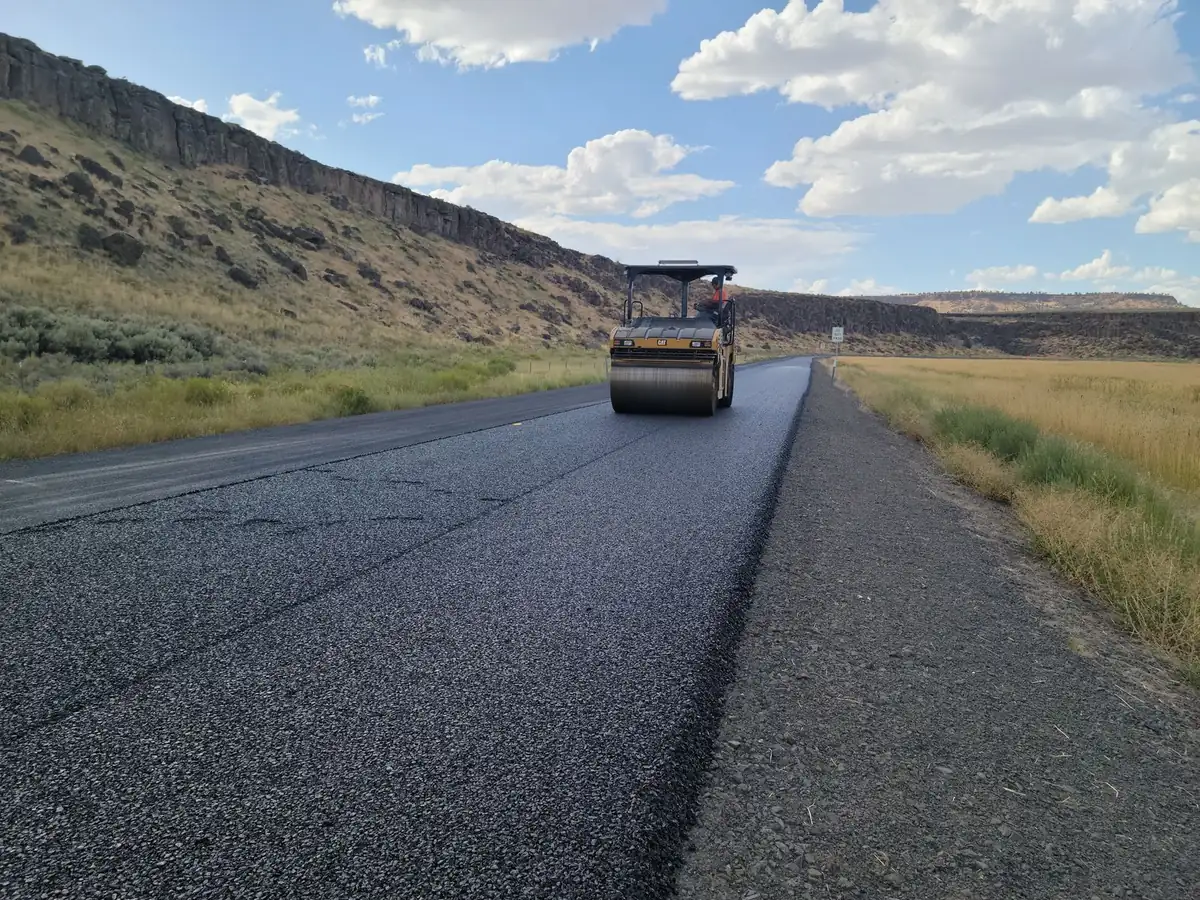
Hot-mix asphalt is laid at around 275 to 300 degrees Fahrenheit and needs to be compacted before it cools below roughly 185 degrees. Rain does two destructive things during that window. First, water on the surface flashes to steam and cools the mat unevenly, so you cannot achieve proper density with the roller. Second, if rain hits the underlying base or gets trapped beneath the mat, you get moisture that later works its way up through the asphalt as the pavement heats and cools — the root cause of raveling, potholes, and stripping.
- Never place hot mix on a wet or standing-water base — trapped moisture undermines the bond
- A surprise shower on a fresh, uncompacted mat can ruin a pour
- Once asphalt is compacted and cooled, light rain is generally harmless
The morning window is your friend
Central Florida's storms are famously predictable in one respect: they usually build in the afternoon heat. That is why our rainy-season asphalt paving jobs start early. A crew that is mixing, placing, and rolling by 7 or 8 a.m. can complete most residential driveways and get the mat compacted long before the typical 2 to 4 p.m. storm cell forms. On larger commercial pours we phase the work so no single area is left exposed and uncompacted heading into the afternoon.
In Florida, you do not fight the rainy season — you schedule around it. The radar is a paving tool.
Sealcoating and crack work have stricter rules
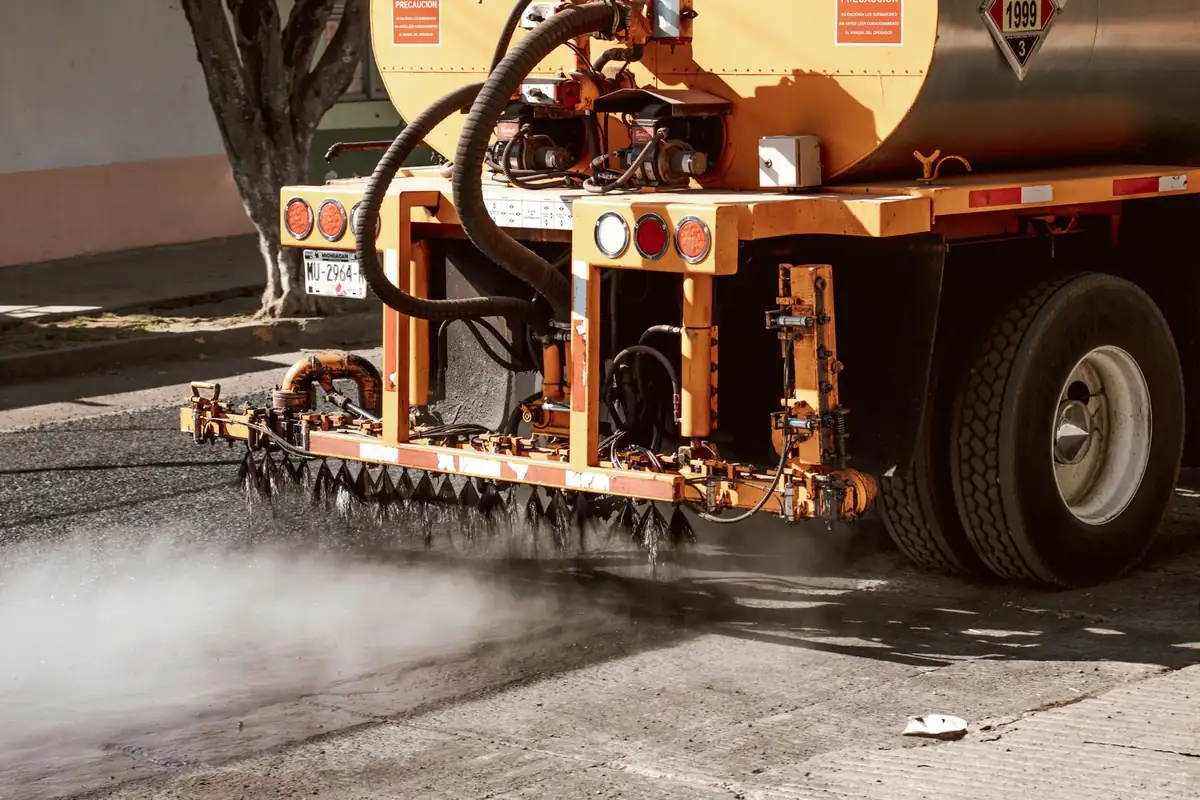
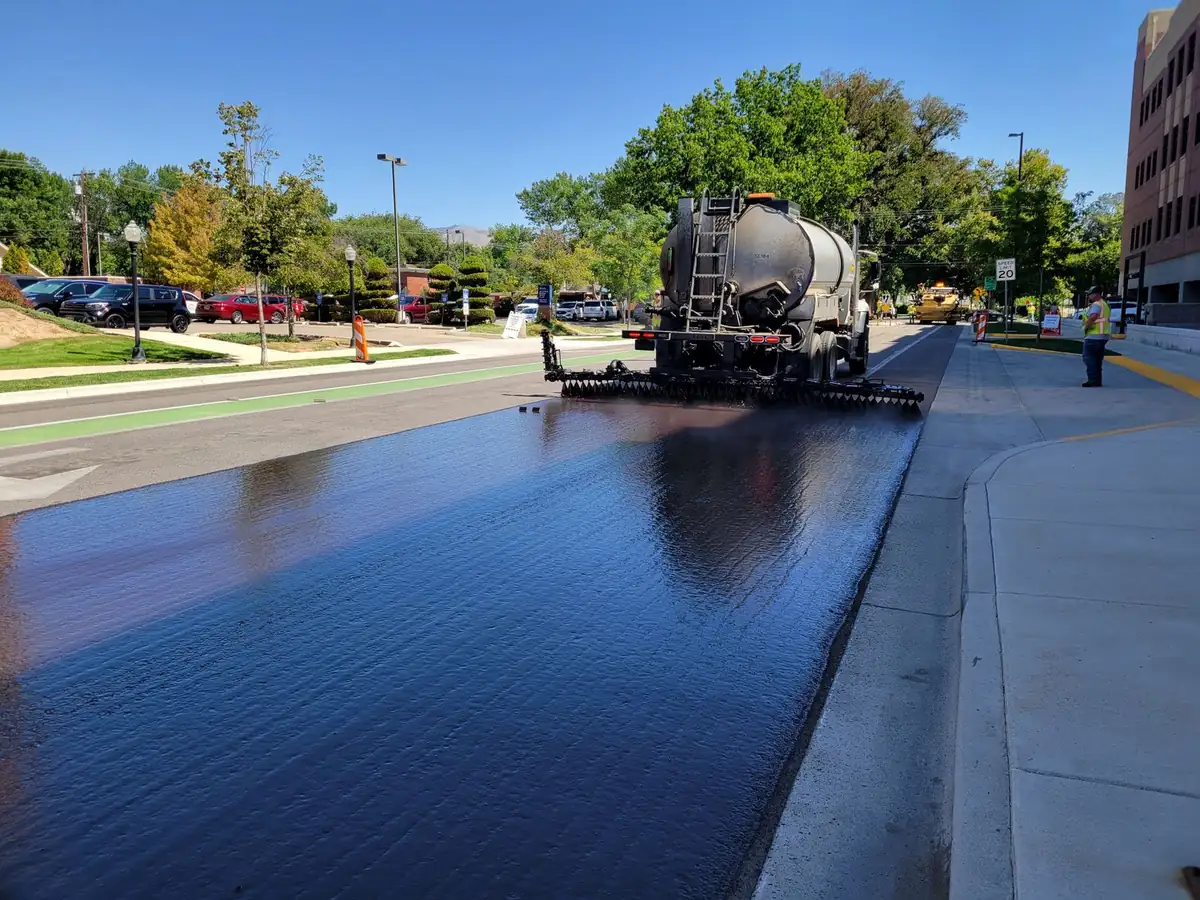
Fresh sealcoating is even less forgiving than hot mix. Coal-tar and asphalt emulsion sealers need a dry surface and typically 24 to 48 hours of dry, warm curing before they can shrug off rain. A downpour on a sealer that has not cured will wash it into your gutters and leave streaky, patchy coverage. During the wet season we watch multi-day forecasts, not just the day of the job, before we seal. The same caution applies to crack filling, where moisture in the crack prevents the hot rubberized material from bonding.
Drainage is what the rainy season punishes
The rainy season is the ultimate test of whether your lot or driveway was graded correctly. Water that ponds instead of running off will find every weak seam, and standing water is the single fastest way to destroy asphalt. If you already see birdbaths after a storm, that is a warning that the surface or base needs attention before the water does the deciding for you. Good grading, functioning drainage, and timely pavement maintenance are what let Florida asphalt survive a season that dumps 30 or more inches of rain in some areas.
What a homeowner can do between storms
- Keep drains, swales, and gutter downspouts clear so water actually leaves the surface
- Report ponding early — it is cheaper to correct grade than to rebuild a failed base
- Schedule sealcoating and repairs for the drier stretches, not August
Can you pave in the summer at all? Yes.
Absolutely. Summer heat is actually excellent for compaction because the mat stays workable longer, which is a real advantage in the mornings before storms arrive. The whole strategy is timing: start early, monitor the radar, protect uncompacted mat, and never seal or fill ahead of rain. Our crews across Orlando and Central Florida do exactly this all summer. For a deeper look at how summer conditions change the game, read our guide on how Florida's heat and humidity affect asphalt.
The bottom line: rainy season is not a reason to delay a project you need, but it is a reason to hire a crew that plans around Florida weather instead of pretending it does not exist.
Need a Free Estimate?
Iron Ridge Pavement gives upfront, no-obligation pricing on paving, sealcoating, striping and repairs across Florida.