Property owners tend to think of striping as a single thing: the lines get painted, they fade, they get painted again. In practice there are several marking systems in use on Central Florida lots, and the choice between them affects how long the lines last, how quickly the lot can reopen and what the job costs. Knowing the basics helps you ask the right question when a striping quote arrives.
Water-based traffic paint
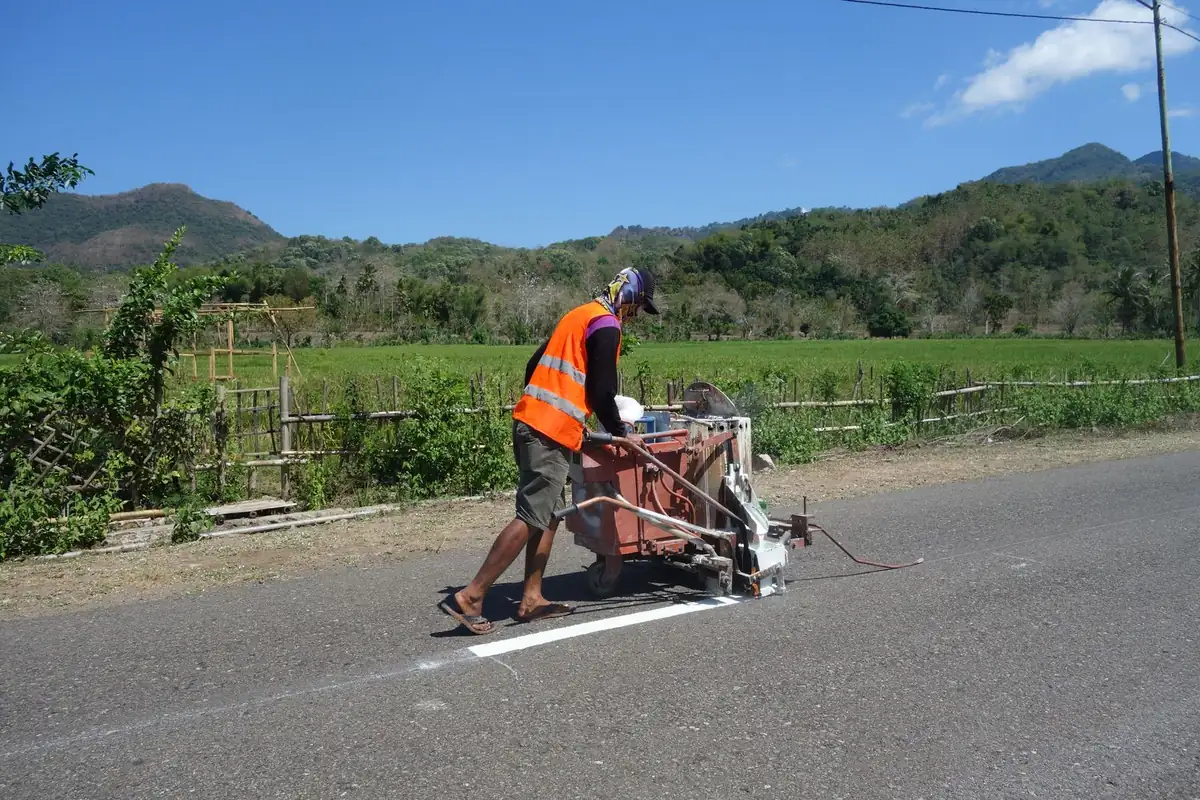
This is the standard for most parking lots. It is a fast-drying acrylic paint formulated for pavement, applied by a striping machine, and it is what you see on the majority of retail, office and community lots in Orlando, Kissimmee and Sanford. It goes down quickly, dries in a short time so the lot can reopen the same day, and comes in the standard colours for stalls, handicap spaces, fire lanes and arrows. It is also the most cost-effective option for the regular re-striping cycle.
Its limitation is durability. Water-based paint wears in the drive aisles and at stall entrances where tires cross it most, and Florida sun fades it. On a typical lot it needs refreshing every few years, more often in high-traffic areas. Our post on how often to re-stripe a parking lot goes into the interval.
Solvent-based paint
Solvent-based traffic paint is more durable and adheres well in damp or cool conditions where water-based paint can struggle. It has a stronger odour, a longer drying time and environmental regulations limit its use in some settings. It still has a place on lots that need extra wear resistance, but for most commercial properties in Central Florida water-based paint is the practical default.
Thermoplastic markings
- Applied hot, as a molten material that bonds to the pavement and sets thick. This is what is used on most public roads for lane lines and crosswalks.
- Far more durable than paint, with reflective glass beads embedded for night visibility.
- Best suited to high-wear locations: stop bars, crosswalks, arrows at entrances, and lines on drive aisles that carry heavy traffic.
- More expensive to apply and not usually worth it for standard stall lines that see only occasional tire contact.
The stall lines can be paint. The stop bar at the entrance that every car crosses is where thermoplastic pays for itself.
Sealcoating and striping go together
New markings on a freshly sealcoated lot last longer and look sharper, because the paint is bonding to a clean, uniform surface rather than to oxidised asphalt and old paint. That is why sealcoating and striping are usually scheduled as one job, with the striping following once the sealer has cured. Striping over sealer that has not cured is a common cause of early failure. Our post on sealcoat cure time in Florida humidity explains the wait.
Layout matters as much as material
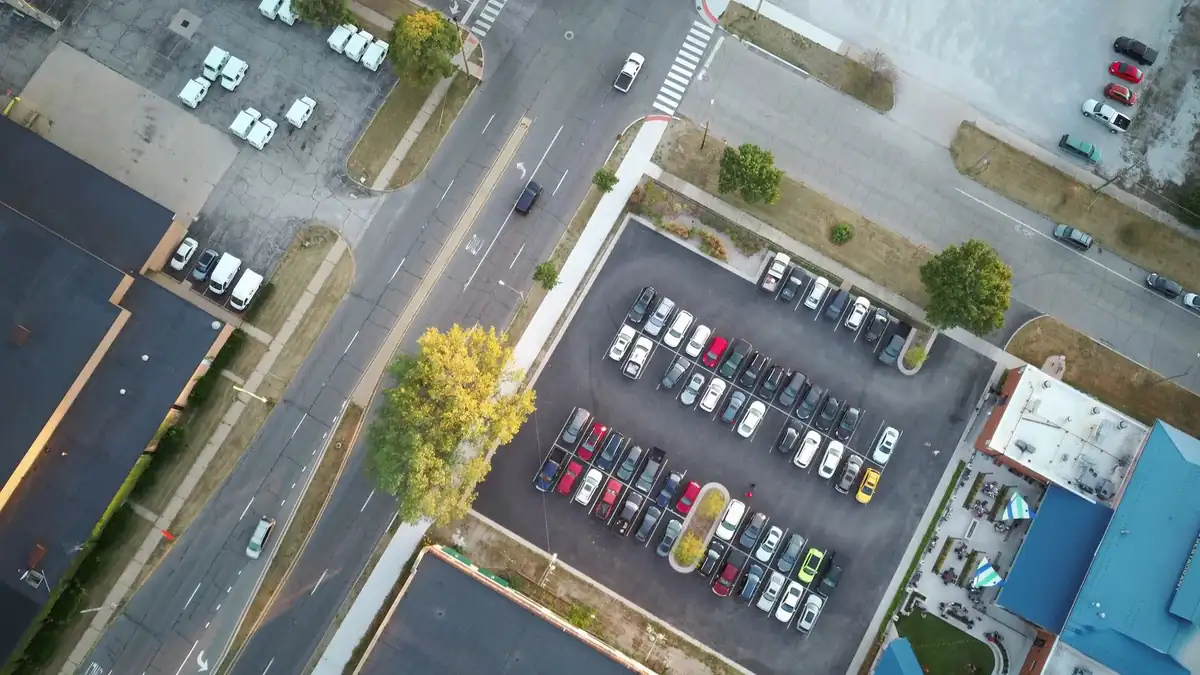
The most durable paint in the wrong place is still a problem. ADA-compliant accessible spaces with correct access aisles and signage, fire lanes marked to the local fire code, and a layout that moves traffic safely are all part of a striping job. Our post on ADA parking lot striping requirements in Florida covers what compliance involves, and our striping page covers the service.
Colour and reflectivity are the other variables. White and yellow are the standard line colours; blue marks accessible spaces and red marks fire lanes. Glass beads can be dropped into wet paint for night visibility on lots that operate after dark, which is worth specifying for a restaurant, a medical office with evening hours or any property with an early-morning shift.
Need a Free Estimate?
Iron Ridge Pavement gives upfront, no-obligation pricing on paving, sealcoating, striping and repairs across Florida.
Iron Ridge Pavement LLC stripes and re-stripes commercial lots across Orlando, Kissimmee, Sanford, Altamonte Springs and Central Florida. Request a striping estimate.