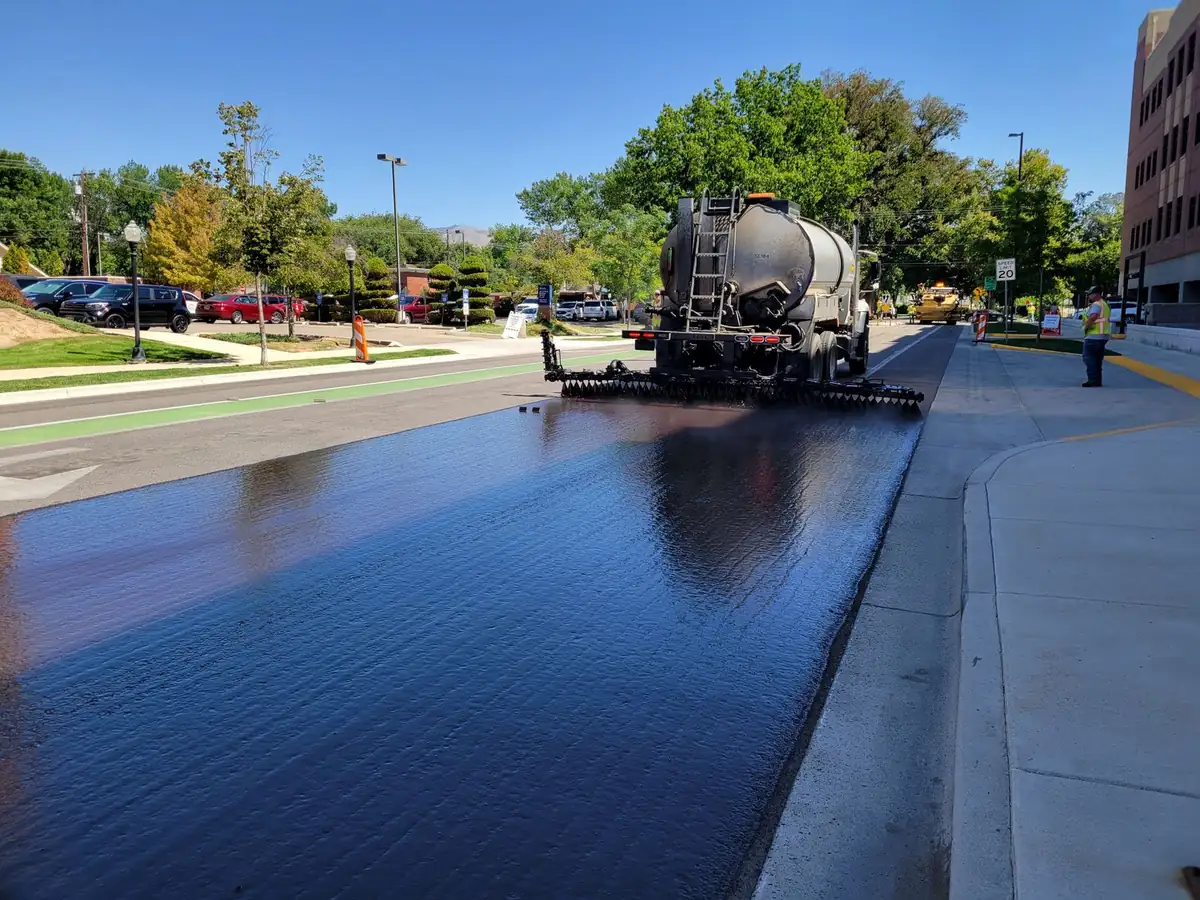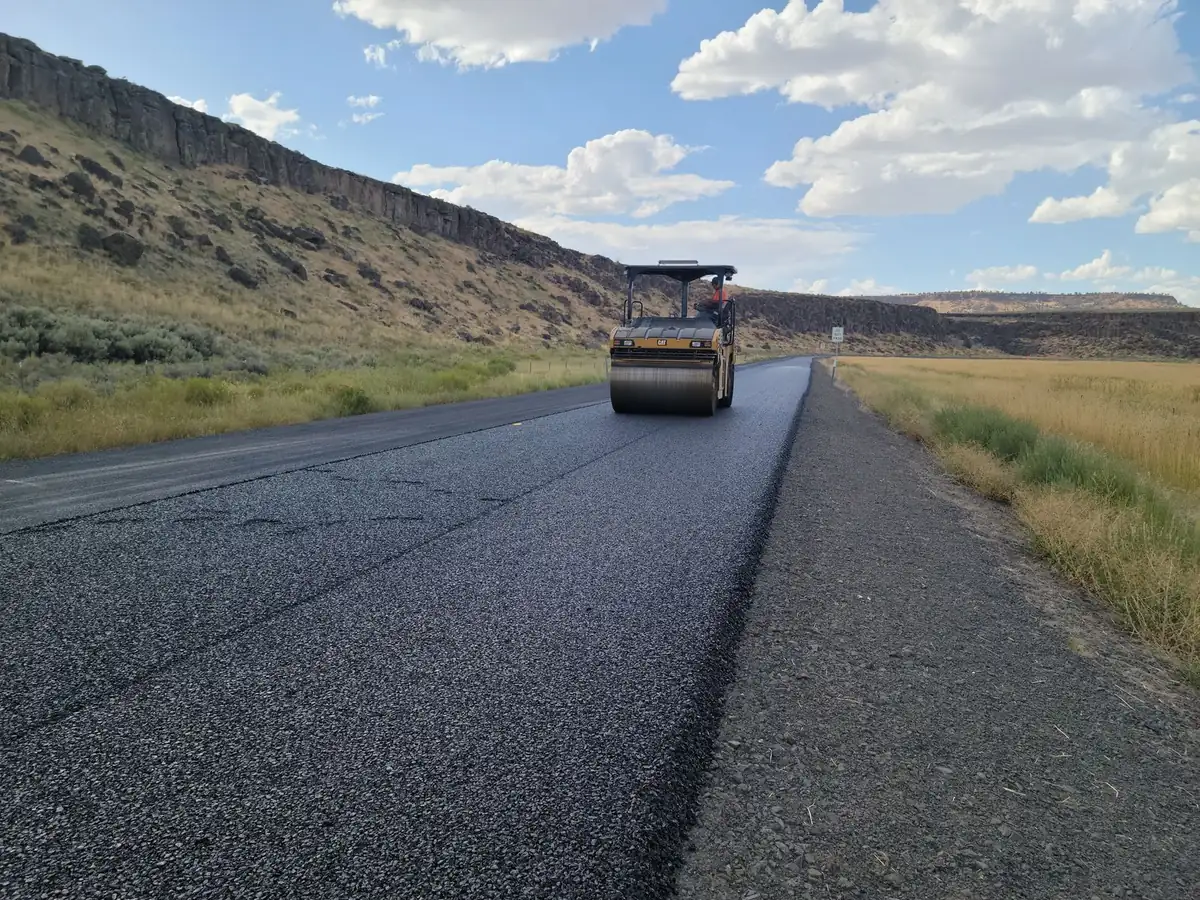
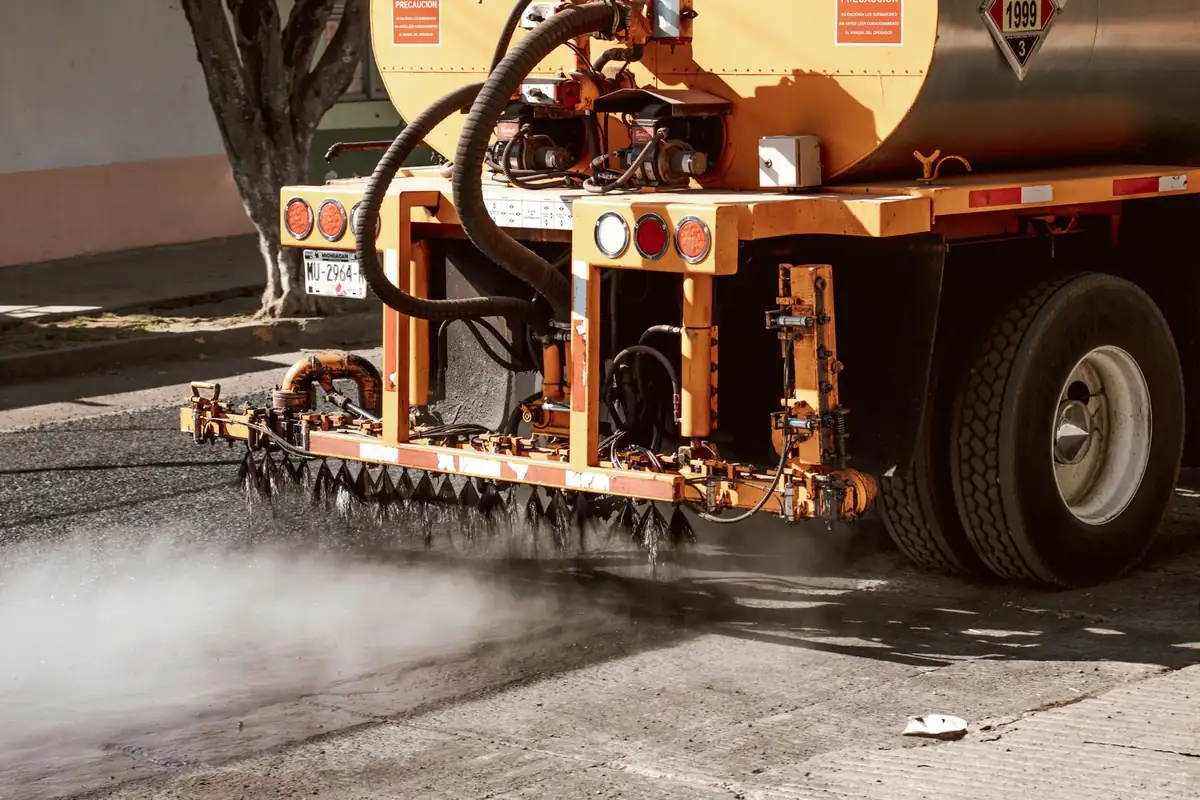
Sealcoat cures by losing water. The material goes down as a water-based emulsion, and as the water evaporates the solids lock together into the protective film. That simple fact explains almost everything about how sealer behaves in Florida, because our air is often already close to saturated with water and does not want to take on more.
Why humidity slows everything down
On a dry day in a dry climate, the water in a sealcoat flashes off quickly. On a humid August afternoon in Orlando or Kissimmee, with the dew point in the mid-seventies, evaporation slows dramatically. The surface can look dry to the touch while the film underneath is still soft, and driving on it at that stage leaves tire marks that never fully fade.
Overnight is worse. Dew forms on cooling pavement in Central Florida almost every night in summer, and a coat that has not fully set before dew falls can re-wet, streak and lose adhesion. That is why the timing of the application within the day matters as much as the day itself.
What a good schedule looks like
- Start early, once overnight dew has burned off the surface, so the coat gets the maximum hours of sun and heat.
- Finish the last pass with enough time for the film to set before the afternoon storm window opens.
- Avoid applying late in the day, when the coat would still be curing as the dew falls.
- Keep foot traffic off for the rest of the day and vehicles off overnight, longer if the weather is heavy.
Sun, shade and the second coat
Sun exposure makes a real difference. A driveway in full sun in Apopka will cure noticeably faster than one under mature oaks in Winter Park, where the shade holds moisture on the surface. On shaded properties we often plan for a longer interval between coats and a longer wait before opening the surface to traffic.
The second coat cannot go on until the first has set enough to take it without dragging. Rushing that interval is a common cause of a patchy finish. In humid conditions the safe interval stretches, and a two-coat job that would be done in a morning elsewhere may take a full day here.
Dry to the touch and cured are not the same thing, and in Florida the gap between them is wider than anywhere else.
When you can drive on it
Foot traffic is usually fine after several hours in good weather. Vehicles should stay off until the next day at the earliest, and in heavy humidity or on shaded surfaces we recommend longer. Turning the wheels while stationary on a fresh coat is the single most common way to mark it, so straight in and straight out for the first few days.
Seasonal timing helps. The cooler, drier months from late fall through spring give the most forgiving cure conditions, though sealer still needs warm enough temperatures to set. We cover the calendar in our post on the best time of year to sealcoat in Florida, and the broader effect of the climate in how Florida's heat and humidity affect asphalt.
Commercial lots add one more scheduling layer. A retail property in Altamonte Springs cannot close for two days, so the lot is sealed in sections, each one cured and reopened before the next is closed. In humid weather that sequencing takes longer, and a contractor who promises a single-day turnaround for a large lot in August is either working a very small area or not allowing for the cure.
Need a Free Estimate?
Iron Ridge Pavement gives upfront, no-obligation pricing on paving, sealcoating, striping and repairs across Florida.
Iron Ridge Pavement LLC schedules sealcoating around the weather across Orlando, Oviedo, Lake Mary and Central Florida. Get in touch and we will plan the right window for your property.