Ask three contractors how they apply sealcoat and you may get three answers. Some spray everything. Some squeegee everything. Some use both on the same job. Property owners in Orlando and Sanford often ask us which is "better," and the honest answer is that each method does a particular job well and the difference in results usually comes from preparation and material, not the applicator.
How spray application works
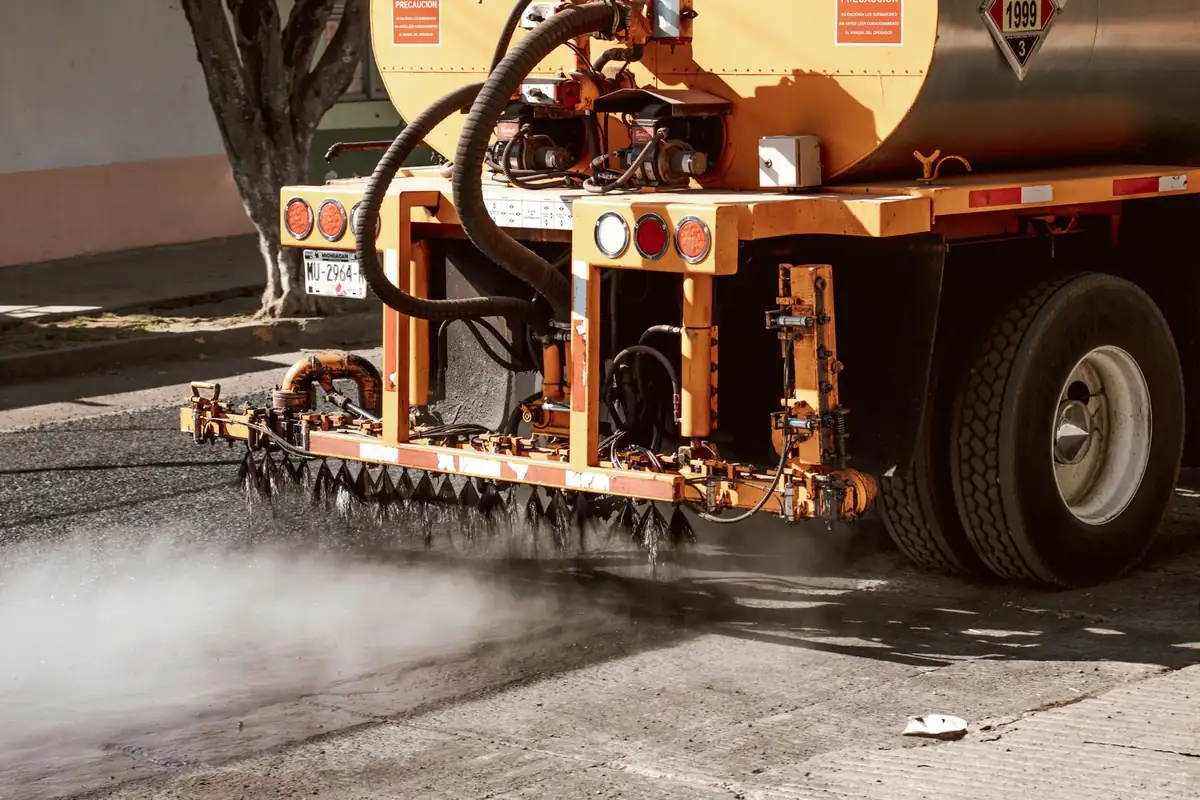
Spray application uses a pressurised wand or a spray bar mounted on a tank to lay sealer in a controlled fan. It is fast, it produces an even, uniform finish on smooth surfaces, and it reaches edges and detail areas around curbs and drains cleanly. On a large, open commercial lot in Lake Mary or Altamonte Springs, spray is often the practical choice because it covers acreage in a fraction of the time.
The trade-off is film thickness. A spray coat is generally thinner per pass than a squeegee coat, so multiple passes are needed to build up protection. On a rough or heavily oxidised surface, spray can skate over the high points and leave the low points thin.
How squeegee application works
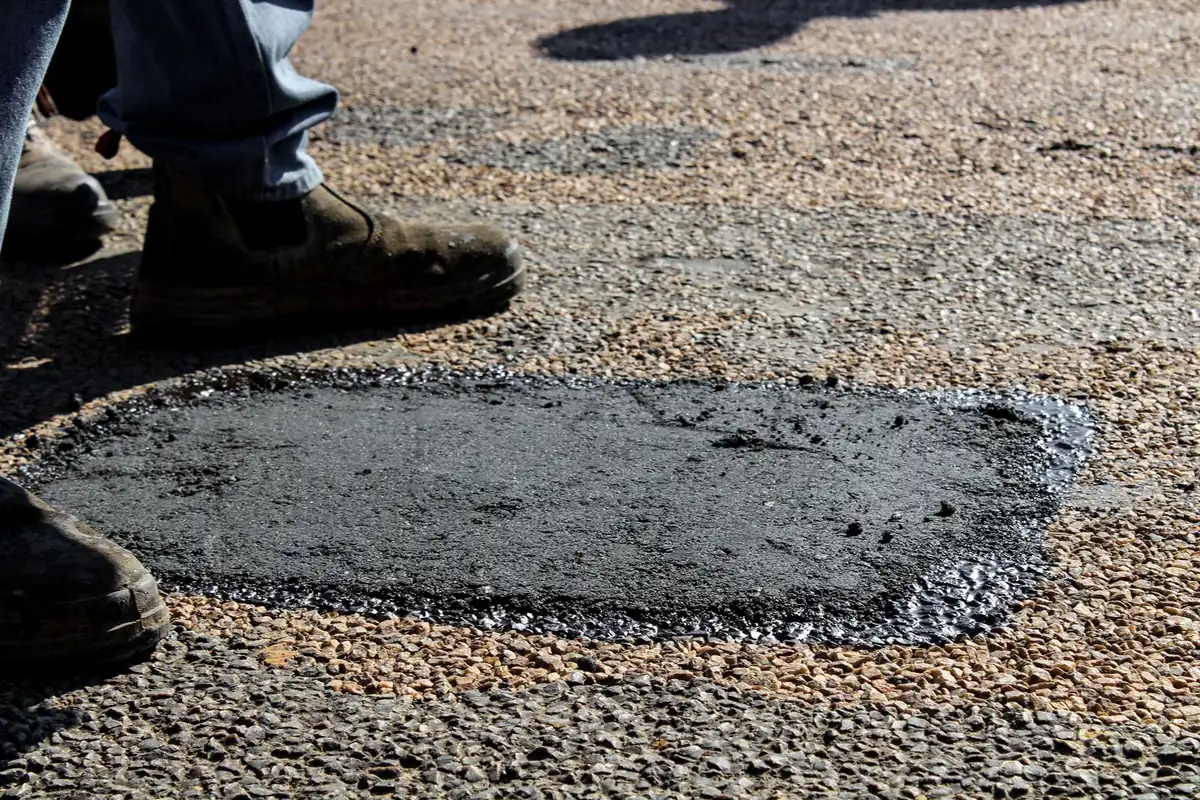
Squeegee application pours sealer onto the surface and works it in with a rubber or foam blade. It forces material into the texture of the asphalt, fills minor surface voids and produces a thicker, more durable film. It is the method we favour on older, weathered driveways in Winter Park or Oviedo where the surface has opened up and needs the sealer worked into it.
It is slower and more labour-intensive, and on very large areas the cost of that labour adds up. Squeegee marks can also show on the finish if the applicator is careless, though on a residential driveway that is a matter of technique rather than an inherent flaw.
Why many jobs use both
- Squeegee the first coat to force material into the surface and fill texture, then spray the second for a smooth, uniform finish.
- Squeegee the worn wheel paths and spray the rest of the lot where the surface is still tight.
- Spray along curbs, around drains and in tight spots where a squeegee cannot reach cleanly.
The applicator is a tool. The result comes from clean pavement, sealed cracks, the right material and the right film thickness.
What matters more than the method
Whichever method is used, the outcome depends on what happens first. The surface has to be cleaned of dirt, sand and organic growth. Oil spots have to be primed. Cracks have to be filled and cured before sealer goes over them, which is why we treat crack filling as a separate step and not something the sealcoat is expected to handle. Then the sealer itself has to be mixed to specification and applied at a rate that actually builds a protective film.
In Florida, timing matters too. Sealer needs a dry surface and enough drying time before the afternoon storms arrive, which is one reason we start early and watch the radar. Our post on the best time of year to sealcoat in Florida covers the seasonal side of that.
One practical note for homeowners comparing quotes: ask which method will be used and how many coats are included. A quote that specifies two coats, the first squeegeed and the second sprayed, is describing a different job from one that specifies a single spray pass, and the price difference between them reflects the film thickness you will actually get.
Need a Free Estimate?
Iron Ridge Pavement gives upfront, no-obligation pricing on paving, sealcoating, striping and repairs across Florida.
Iron Ridge Pavement LLC applies sealcoating by the method that suits the surface, on driveways and commercial lots across Central Florida. Ask us which is right for your property.