Somebody has to run a new water line, repair a sewer lateral, or pull electrical conduit to a new sign, and the shortest route is straight through the parking lot. The trench gets dug, the line goes in, the hole gets filled and a strip of asphalt goes over the top. A year later there is a long sunken groove across the lot with a crack down each side. Utility cuts are one of the most common causes of localised pavement failure on commercial property in Central Florida, and almost all of it is avoidable.
Why trench patches sink
The pavement around a trench was built on a base that was placed in layers and compacted over a wide area. The trench backfill was placed in a narrow slot, often in one or two thick lifts, with compaction that cannot reach the same density in that confined space. Over the following months the backfill settles, and the asphalt over it sinks with it. Sandy Central Florida soil settles readily, and summer rain washing into the trench through the patch edges speeds it up.
The second problem is the edges. A trench cut with a jackhammer or a bucket leaves ragged, sloping sides. New asphalt against a ragged edge does not bond cleanly, and the joint opens up into a crack that lets water straight into the backfill.
What a proper trench patch involves
- Saw-cut the pavement on both sides of the trench, wider than the excavation, to give clean vertical edges in sound asphalt.
- Backfill in thin lifts, compacting each one, with material that will hold its shape. Flowable fill is sometimes used where compaction is difficult.
- Place and compact an aggregate base to match the depth of the surrounding pavement base.
- Tack the cut edges, then place hot-mix asphalt in lifts to match the surrounding thickness, compacting each one.
- Finish flush with the existing surface, not proud and not low.
A trench patch is a small pavement built inside a big one. It needs the same base, the same compaction and the same care.
Coordinating with the utility contractor
The plumbing, electrical or utility contractor is focused on the line, not the pavement. On a commercial property in Orlando, Lake Mary or Sanford, the most reliable approach is to have the pavement restoration handled by a paving contractor, either scheduled to follow the utility work directly or brought in to rebuild a temporary patch properly once the line is complete. Agreeing up front who is responsible for the final patch avoids the situation where a temporary cold-patch fill becomes permanent by default.
Temporary versus permanent
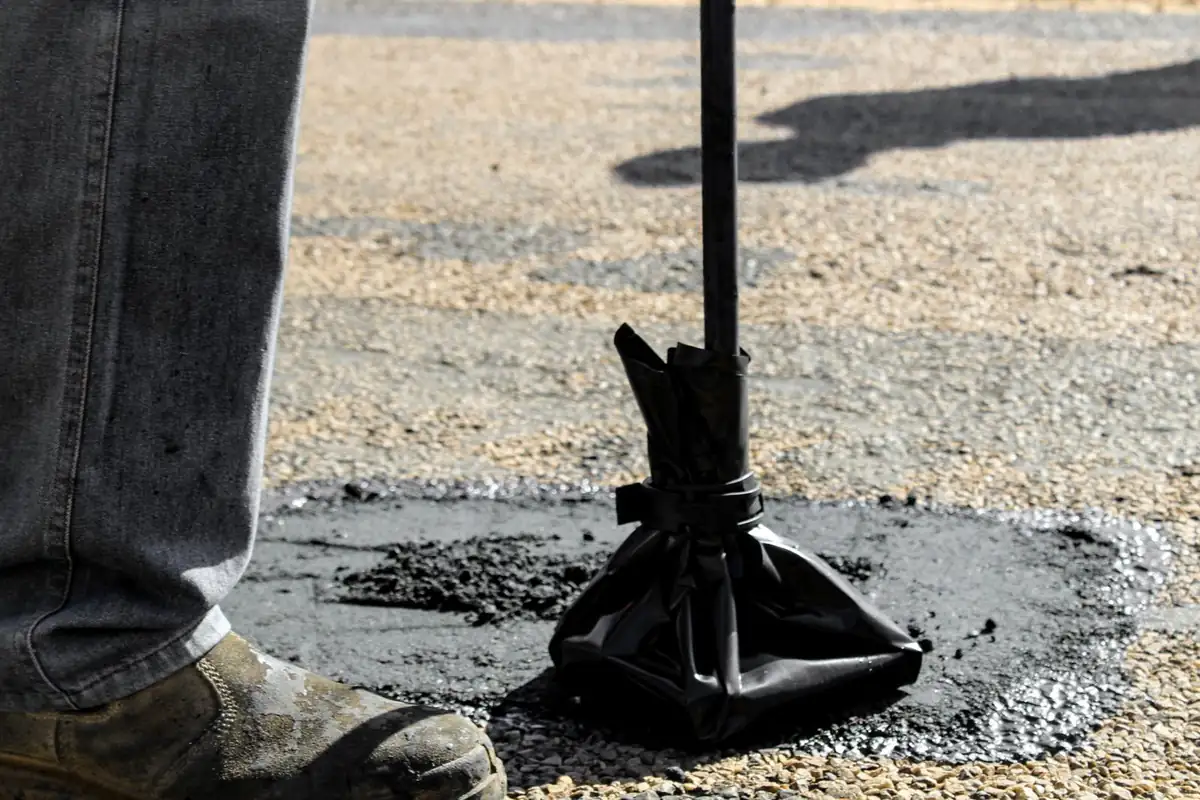
Cold-patch material is fine for keeping a trench safe for a few days while the backfill settles or the utility work is inspected. It is not a permanent repair. It does not bond to the edges, it does not compact to full density and it wears out quickly under traffic. If a utility contractor has left cold patch across your lot, plan for a proper hot-mix trench patch to follow.
Fixing an old sunken trench
A trench that has already settled can be rebuilt. The sunken strip is saw-cut back to sound pavement, the old patch and the loose backfill are removed to a stable depth, and the trench is rebuilt as described above. If the settlement is minor and the base has finished moving, a skin patch may bring it back flush. Our post on skin patch versus full-depth patch explains how that decision is made, and our asphalt repair page covers the service.
Need a Free Estimate?
Iron Ridge Pavement gives upfront, no-obligation pricing on paving, sealcoating, striping and repairs across Florida.
Iron Ridge Pavement LLC restores utility cuts and trench patches on commercial lots and driveways across Orlando, Sanford, Lake Mary and Central Florida. Request a repair estimate.