"Patch" covers a lot of ground in paving. A quick fill of a pothole, a thin layer troweled over a worn spot and a section cut out and rebuilt from the base up are all called patches, and they cost and last very differently. Property owners in Orlando and Kissimmee who have paid for a patch that failed in a season usually paid for the wrong kind.
What a skin patch is
A skin patch, sometimes called a surface patch or overlay patch, is a thin layer of hot-mix asphalt placed over an existing surface after cleaning and a tack coat. It does not remove the old pavement. It is feathered at the edges to blend with the surrounding surface and compacted in place. It is quick, it is relatively inexpensive and it restores a smooth surface immediately.
It is the right answer when the problem is on the surface only: ravelling, a shallow depression, a worn area where the base underneath is still sound and dry. It is the wrong answer when the problem is underneath, because the patch simply inherits it.
What a full-depth patch is
- The failed area is marked out to include a margin of sound pavement around it, then saw-cut to give clean vertical edges.
- All the asphalt inside the cut is removed, and the base beneath is inspected.
- Soft, wet or contaminated base is excavated, replaced with graded aggregate and compacted. Drainage problems that caused the failure are corrected.
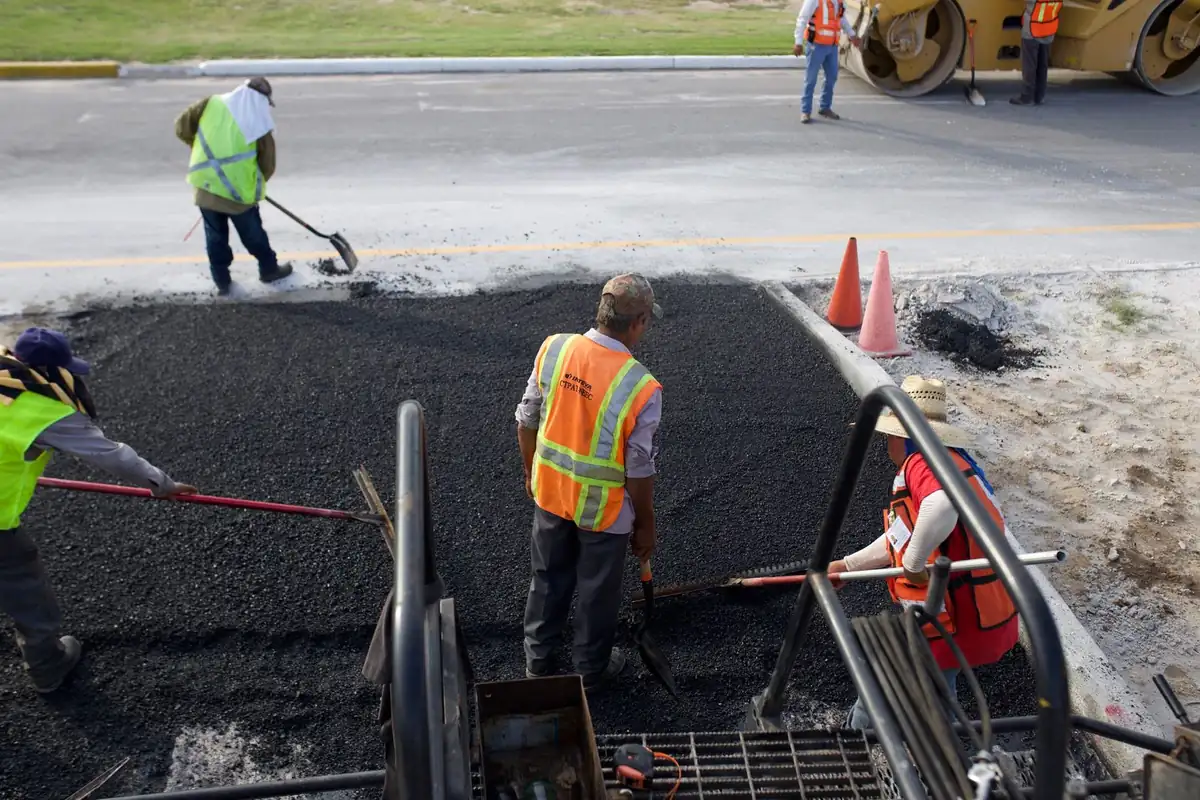
- The edges of the cut are tacked, and new hot-mix is placed in lifts and compacted to match the surrounding surface.
A skin patch fixes what you can see. A full-depth patch fixes what caused it.
How to tell which one you need
The pattern of the damage is the best guide. Alligator cracking, a sunken area, a pothole that has come back after being filled, or a spot that stays wet after the rest of the lot dries are all signs of base failure, and they need full-depth repair. Our post on alligator cracking explains why surface treatments do not hold there. Surface ravelling, a shallow scrape, or a worn wheel path over pavement that is otherwise firm can usually take a skin patch.
A simple field check helps. Walk the area after heavy rain. If it dries with the rest of the surface and does not move underfoot, the base is probably fine. If it holds water, feels soft or springs slightly when a vehicle crosses it, the base is the problem.
The cost of choosing wrong
A skin patch over base failure looks good for weeks and then cracks in the same pattern as before, because the base is still moving beneath it. The money is spent twice: once on the patch and again on the repair that should have been done first. In the other direction, a full-depth patch on a surface-only problem is not wrong, just more than was needed.
On a commercial lot in Sanford or Altamonte Springs, the choice also affects downtime. A skin patch can be open to traffic within hours. A full-depth patch takes longer because of the excavation and base work, though it is usually still open the same day or the next. Our post on potholes: patch, repair or resurface covers where the line falls between patching and a larger fix.
When patching stops making sense
If a lot needs full-depth patches in many places, the pavement as a whole is telling you something. At some point the cost of many patches exceeds the cost of milling and overlaying the affected area, or of rebuilding it. A condition assessment is how that line is found. Our asphalt repair service starts with that assessment rather than assuming a patch is the answer.
Need a Free Estimate?
Iron Ridge Pavement gives upfront, no-obligation pricing on paving, sealcoating, striping and repairs across Florida.
Iron Ridge Pavement LLC does both kinds of patch and will tell you which one your pavement needs, across Orlando, Kissimmee, Sanford and Central Florida. Request a repair estimate.