Sealcoating is a protective liquid coating applied over asphalt to shield it from the things that destroy it — UV rays, water, oil, and gasoline. Think of it as sunscreen and a raincoat for your pavement. It doesn't repair damage, but it dramatically slows down the aging that leads to damage in the first place.
The real question homeowners and property managers ask us is whether it's actually worth the money or just an upsell. Here in Florida, the math leans hard toward "worth it." Here's why.
What sealcoating actually does
A fresh coat of sealer forms a barrier over the asphalt binder that holds your pavement together. That barrier does four jobs:
- Blocks UV rays that oxidize and dry out the binder — the number one cause of asphalt failure in Florida.
- Waterproofs the surface so rain sheds off instead of soaking in and undermining the base.
- Resists oil and gas spills that would otherwise dissolve the binder.
- Restores the deep black finish that makes a property look maintained and cared for.
The economics: a small cost that protects a big one
This is where sealcoating earns its keep. Sealcoating typically costs a fraction of what it costs to resurface or repave. A resurface runs several dollars per square foot; a full repave runs several times that. Sealcoating is a small fraction of either.
Asphalt that's sealed on schedule can last 25 to 30 years. Asphalt left bare to the Florida sun often needs major repair or replacement in half that time. You're spending a little every couple of years to avoid spending a lot all at once. That's the entire pitch, and the numbers back it up.
Sealcoating costs pennies compared to repaving. Its whole job is to keep you from ever writing the big check.
When sealcoating is NOT worth it
We won't sell you something you don't need. Sealcoating is the wrong move if:
- Your asphalt is already badly cracked, crumbling, or full of potholes — at that point you need repairs or resurfacing, not a cosmetic coat.
- The pavement is brand new and hasn't cured yet.
- The base underneath has failed, which no surface treatment can fix.
Sealcoating protects good asphalt. It cannot rescue failed asphalt. Knowing the difference is the difference between money well spent and money wasted. Our guide on sealcoating vs. resurfacing vs. repaving breaks that down further.
How sealcoating is actually applied
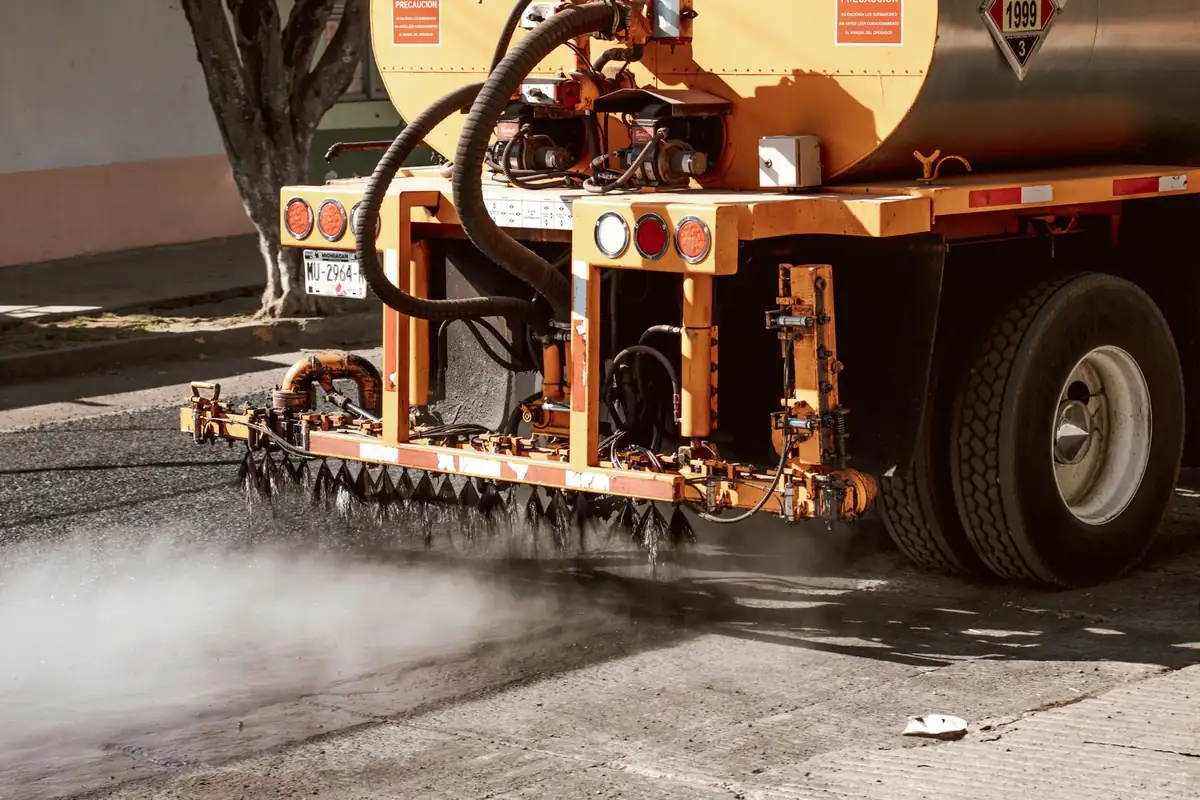
Knowing what you're paying for helps you judge the work. A proper sealcoat job isn't just spraying black liquid around. It runs like this:
- The surface is cleaned thoroughly — swept and blown clear of dirt, and washed where oil has soaked in — because sealer won't bond to a dirty or greasy surface.
- Cracks are filled and oil spots are primed so the coating adheres uniformly.
- Two coats of sealer are typically applied, cut in by hand at the edges and squeegeed or sprayed across the field.
- The surface is closed to traffic for 24 hours or more so the coat can cure without being tracked or rained on.
Cutting corners on cleaning or rushing the cure is how you end up with a coat that streaks or peels. In Florida, watching the forecast for that 24-hour dry window is as important as the application itself.
The curb-appeal bonus
There's a reason freshly sealed lots look so sharp. That uniform black finish reads as "well run" to customers and adds real value to a home sale. For a commercial property, pairing a fresh seal with crisp new striping is one of the cheapest facelifts you can buy. Curb appeal is a real, measurable return on a coat that was mostly bought for protection anyway.
Our verdict for Florida properties
If your asphalt is structurally sound, sealcoating in Florida is one of the highest-return maintenance dollars you can spend. The intense UV here makes protection more valuable than it is almost anywhere else. Skip it, and the sun collects its payment later — with interest.
Need a Free Estimate?
Iron Ridge Pavement gives upfront, no-obligation pricing on paving, sealcoating, striping and repairs across Florida.