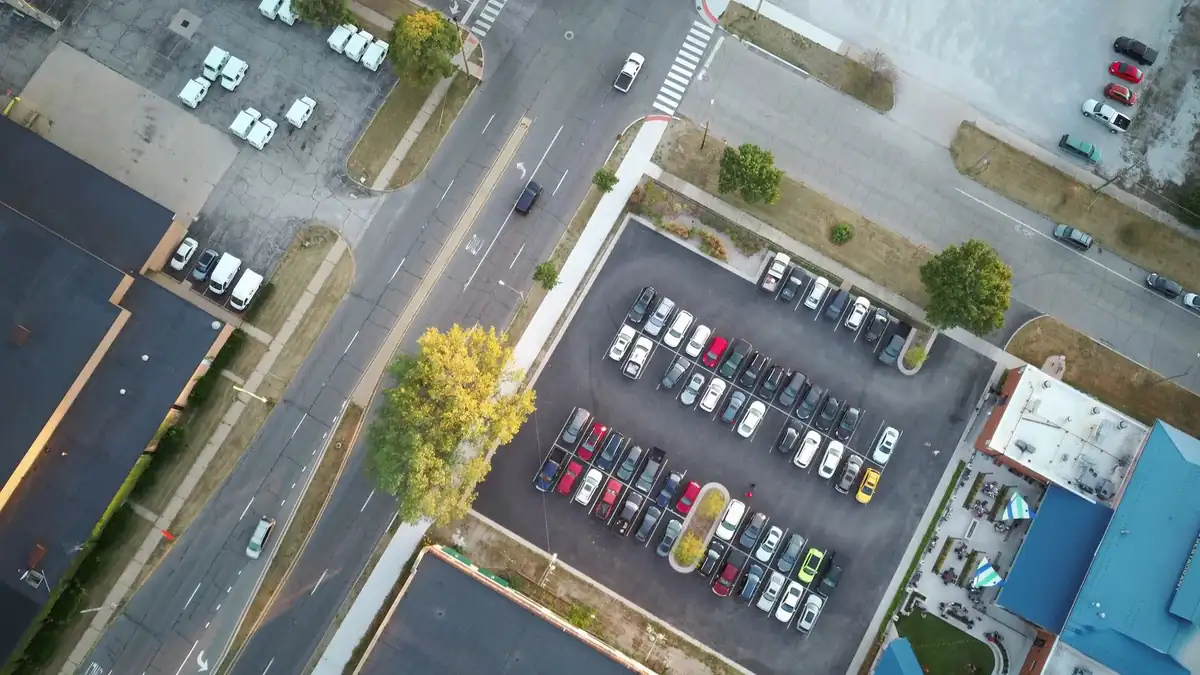
A parking lot is more than pavement and paint. The hardware that controls where vehicles stop is what keeps cars off the sidewalk, away from the storefront glass and out of the landscaping. Property owners in Orlando, Lake Mary and Kissimmee often ask about wheel stops and bollards as part of a striping or sealcoating job, and the answer depends on what needs protecting and how the lot is used.
Wheel stops
Wheel stops, also called parking blocks or bumpers, are the low barriers at the head of a stall that stop a vehicle's front wheels before the bumper reaches whatever is beyond. They are made of concrete, recycled rubber or plastic. Concrete is heavy and durable but cracks and chips over time. Rubber and plastic are lighter, easier to install and replace, and more forgiving when struck.
They are the right choice where a stall faces a sidewalk, a landscaped island or a low wall, and where vehicles need to be kept a set distance back. They are anchored into the asphalt with pins or bolts, and the anchor holes are the detail that matters: they need to be drilled cleanly and sealed so water does not get into the pavement around them.
The case against wheel stops
- They are a trip hazard in pedestrian areas, especially at night, and are a common source of slip-and-fall claims.
- They obstruct sweeping and sealcoating, and debris collects behind them.
- In ADA access aisles and accessible routes they can create obstructions that affect compliance.
- They shift or break when struck by larger vehicles and then become a hazard themselves.
For these reasons, many lot designs use a continuous curb at the head of the stalls instead, or rely on stall depth and a clear sidewalk setback. Where wheel stops are used, they should be placed consistently, kept in good condition and considered in the striping layout.
A wheel stop protects the sidewalk from the car. A bollard protects the building from the car. They are not interchangeable.
Bollards
Bollards are vertical posts, usually steel and often filled with concrete, set into a footing to stop a vehicle rather than just a wheel. They are used to protect storefront entrances, utility equipment, fuel dispensers, outdoor seating and anything else a vehicle must not reach. Unlike wheel stops, a properly installed bollard will stop a car that has accelerated by mistake, which is why they are standard at building entrances that face parking.
Installing bollards in an asphalt lot means coring or cutting the pavement, placing a footing, and reinstating the asphalt around the post. The reinstatement is the part that is often done badly. A bollard surrounded by loose, cracked asphalt lets water into the base and becomes a maintenance problem. It should be patched with hot-mix and compacted like any other repair.
Curbing and islands
Concrete curbing is the most robust way to define where pavement ends, protect landscaping and confine the edge of the asphalt, which is one of the things that makes a lot last. Curbed islands also give striping and signage a fixed reference, and they channel traffic in ways that paint alone does not. Our post on designing an efficient parking lot layout covers how islands and curbs fit into the plan.
Coordinating with striping and sealcoating
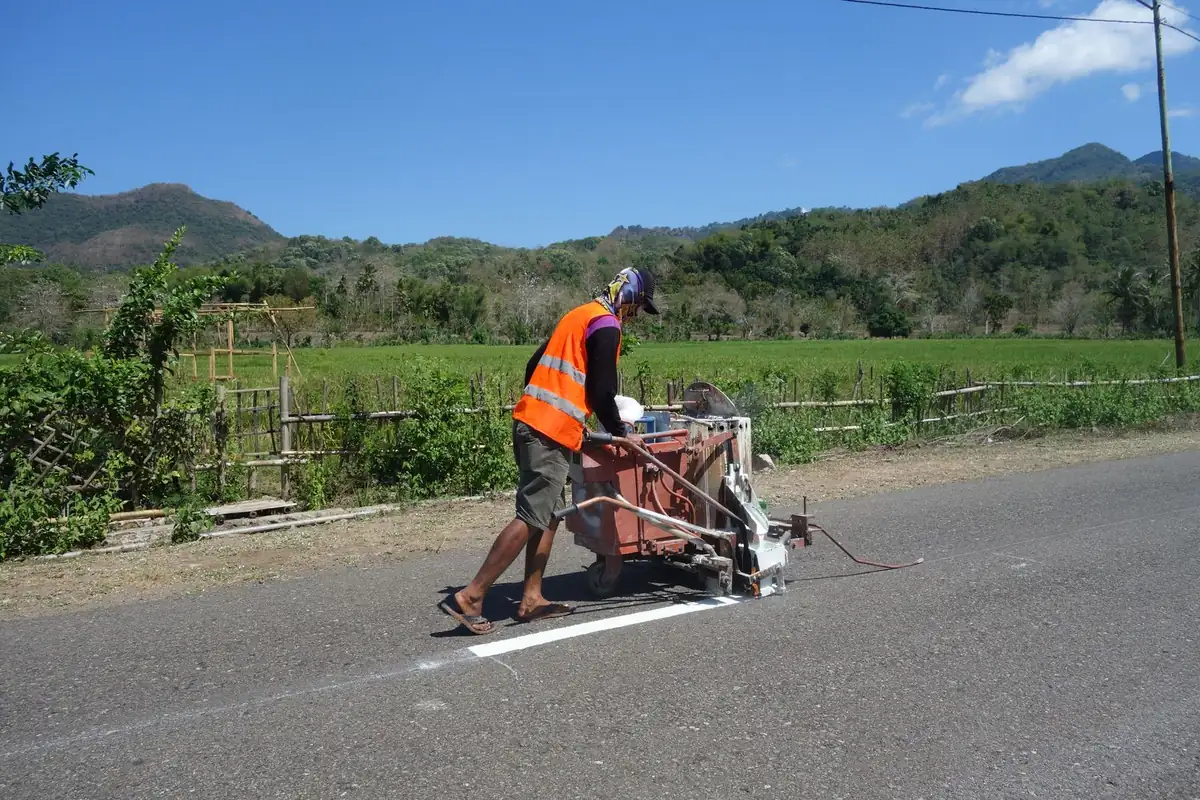
Wheel stops should be removed or lifted before sealcoating so the sealer covers the pavement beneath them, then reinstalled once the surface has cured. Bollards are painted or sleeved in high-visibility colour as part of the striping job. Our striping and sealcoating services include this coordination.
Need a Free Estimate?
Iron Ridge Pavement gives upfront, no-obligation pricing on paving, sealcoating, striping and repairs across Florida.
Iron Ridge Pavement LLC handles wheel stops, curb-line striping and pavement reinstatement around bollards on commercial lots across Orlando, Lake Mary, Kissimmee and Central Florida. Request an estimate.