Of all the crack patterns that show up on asphalt, alligator cracking is the one property owners most need to understand, because it is the one that cannot be handled with a crack sealer and a sealcoat. The interlocking, scaly pattern that gives it its name is the surface telling you something has gone wrong underneath.
What it looks like and what it means
Alligator cracking, also called fatigue cracking, shows up as a network of small connected cracks forming irregular blocks, usually a few inches across, that resemble reptile skin. It most often appears in wheel paths, at the entrance to a driveway, in the drive aisles of a parking lot in Orlando or Kissimmee, or anywhere heavy vehicles repeatedly stop and turn.
The pattern forms because the asphalt is flexing more than it can tolerate. Each pass of a load bends the surface slightly, and when the base beneath is not supporting it properly, that bending exceeds what the material can absorb. The cracks are the fatigue accumulating. The root cause is almost always in the base, not the surface.
Why it happens in Florida
- Water in the base. Our sandy soils drain well when they are clean, but once water is trapped in a base that was not built with proper drainage, it loses its bearing capacity. Our post on standing water and pavement damage explains how that starts.
- Thin construction. Driveways and lots built with too little base or too little asphalt for the loads they carry flex more and fatigue sooner.
- Loads that exceed the design. A residential driveway that starts hosting a loaded work truck, or a retail lot that becomes a delivery route, will fatigue in those areas.
- Organic material left in the base during construction, which decays and leaves voids.
Alligator cracking is not a crack problem. It is a base problem wearing a crack pattern.
Why sealing it does not work
Crack sealant is designed for individual cracks that open and close with temperature. Alligator cracking is a dense network of small cracks over a base that is still moving. Sealer poured into it has nowhere to bond and the area keeps flexing underneath. Sealcoating over the top hides it for a season and then the pattern returns, usually worse, because water has continued getting in the whole time.
Left alone, the blocks eventually loosen and pop out, and the area becomes a pothole. Our post on potholes: patch, repair or resurface picks up the story from there.
The repair that holds
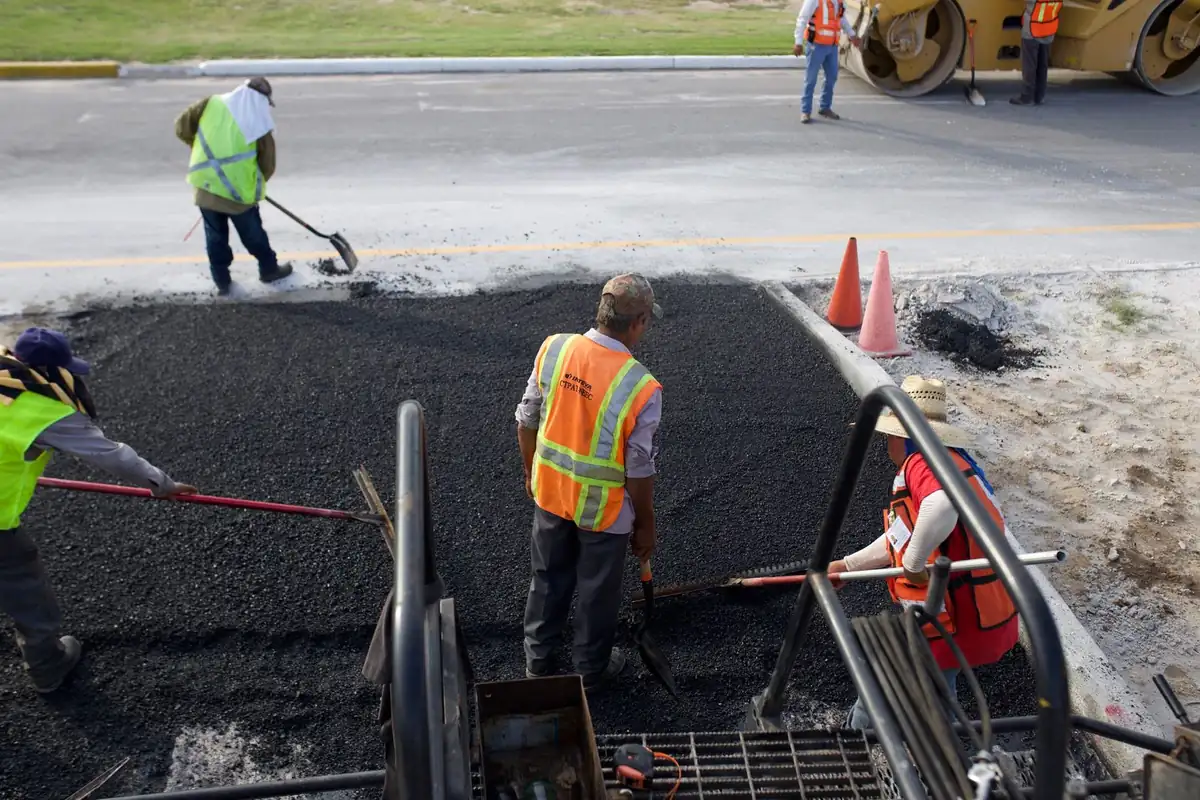
The correct fix is a full-depth patch. The failed asphalt is saw-cut and removed, the base underneath is excavated, dried, corrected and recompacted, and new hot-mix is placed and compacted in lifts to match the surrounding surface. If the cause was water, the drainage that let it in is corrected at the same time. That is more work than a surface patch, but it is the only version that does not need doing again.
Where alligator cracking covers a large proportion of a lot, the calculation shifts toward reconstruction of the affected sections or a full rebuild rather than patching each area. A condition assessment is the way to make that call. Our asphalt repair and pavement maintenance services both start there.
One more distinction worth making: alligator cracking is not the same as block cracking, which forms larger rectangular blocks across a whole surface and comes from the asphalt shrinking as it ages rather than from the base failing. Block cracking is a surface problem that crack sealing and sealcoating can manage. The small, tight, interlocking pattern in wheel paths is the one that needs the base looked at.
Need a Free Estimate?
Iron Ridge Pavement gives upfront, no-obligation pricing on paving, sealcoating, striping and repairs across Florida.
Iron Ridge Pavement LLC repairs alligator cracking at its source on driveways and lots across Orlando, Sanford, Apopka and Central Florida. Request an assessment before it becomes a pothole.